


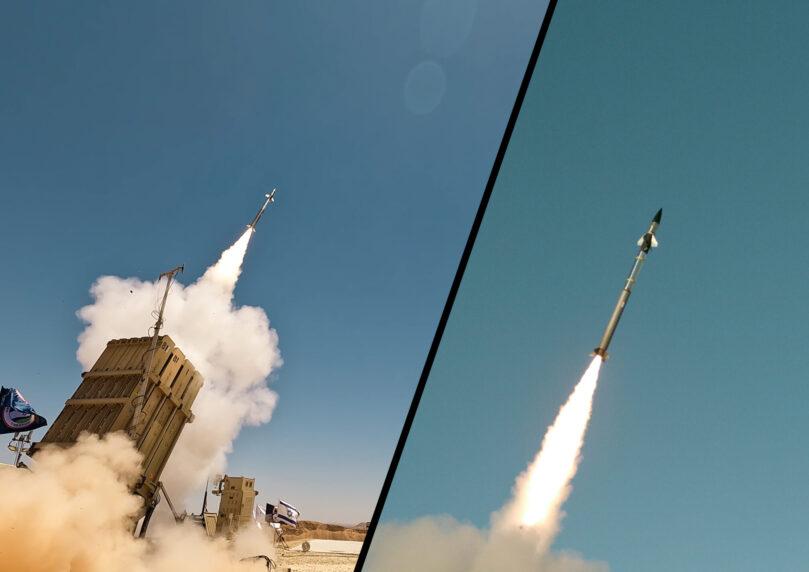

Israel’s Defense Ministry and Rafael Advanced Defense Systems completed a major round of testing for the Iron Dome air defense system, examining upgrades designed to improve interception capabilities against rockets, cruise missiles, and drones. According to the Defense Ministry, the upgrades were developed in part from operational lessons learned during the war and operations against Iran. The tests were led by the “Homa” (Wall) directorate at the Defense Ministry’s research and development arm.


 2+
The tests examined the system’s ability to handle larger-scale barrages alongside scenarios simulating current and future threats. Defense Ministry officials said the upgrades are expected to expand air defense capabilities in the coming years.
For the first time, the tests integrated the “Iron Beam” laser system into Iron Dome’s command and control network. The system, currently being operationally deployed, is designed to serve as a complementary defense layer to Israel’s air defense array.
 2+
Moshe Patel, head of the Homa directorate, said the upgrades were built on operational experience accumulated during the war. According to him, integrating Iron Beam into Iron Dome’s command and control system means “home front defense capabilities are reaching new heights.” He added that efforts continue to increase interceptor production rates in both Israel and the United States.
 2+
Rafael CEO Yoav Tourgeman also addressed the test results, saying the trials examined new Iron Dome capabilities in complex scenarios, including integration of the Iron Beam laser system, which was delivered to the Israel Defense Forces (IDF) several months ago. According to him, the tested capabilities are expected to be integrated into the IDF’s air defense array and expand the defense envelope against future threats and scenarios.
The Iron Dome system has been in operational service since 2011 and serves as Israel’s primary defense layer against rockets and short-range aerial threats. According to Defense Ministry data, the system intercepted thousands of aerial threats during the war.