


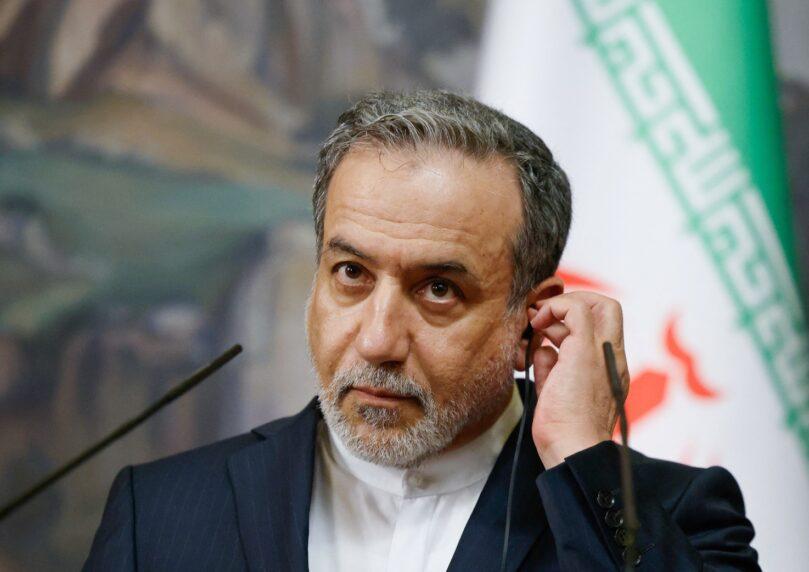

Iranian Foreign Minister Abbas Araghchi declared Monday that the Islamic Republic of Iran has “full and exclusive authority” over the Strait of Hormuz. Official Iranian media quoted the senior minister emphasizing that his country alone bears responsibility for managing maritime traffic and reopening navigation in the strategic waterway, and that no other country or international body holds any authority in this space.


 2+
Technical teams and senior policy officials from the United States and Iran are set to meet tomorrow in Qatar in an attempt to prevent the collapse of the temporary peace agreement between the two countries. The urgent talks come after military escalation and exchanges of blows over the past weekend in the Gulf that threatened to bring about the complete collapse of the fragile agreement signed between the sides.
U.S. President Donald Trump confirmed the meeting on his social media platform, while the White House announced it is dispatching special envoys Jared Kushner and Steve Witkoff for the official talks, which will take place alongside technical discussions.
 2+
Alongside confirmation of the talks, Iranian President Masoud Pezeshkian announced in official media that following the agreement, $6 billion out of $12 billion in Iranian assets frozen in Qatar will soon be released. Pezeshkian described the agreement, which includes sanctions relief on Iran’s oil and petrochemical sectors, as “a great victory for the Iranian people.” A senior Iranian source added that Doha and Tehran are in final stages of finalizing technical details for transferring the first $6 billion, which will be transferred in two installments.
However, the security backdrop to the meeting remains highly volatile. The exchanges of fire began last Thursday after an Iranian projectile struck a cargo ship in the Strait of Hormuz, with both sides accusing each other of violating the temporary ceasefire. In response to threats Trump posted on social media, Iran’s Revolutionary Guards launched missiles and drones overnight Saturday into Sunday at American military bases in Kuwait and Bahrain, where air defense systems and sirens were activated.
 2+
Trump warned on social media that “a point could come where we can no longer act rationally, and we’ll be forced to militarily complete the work we started with great success. If that happens, the Islamic Republic of Iran will no longer exist.”
In response, the IRGC said the American strikes violated the ceasefire, and declared that American bases in the region “will experience hell in the coming days.” White House spokesperson Karoline Leavitt told Fox News that the U.S. is committed to the ceasefire but sent a firm message: “As far as we’re concerned, we’re holding up our end of the ceasefire. Violence will be met with violence.”