


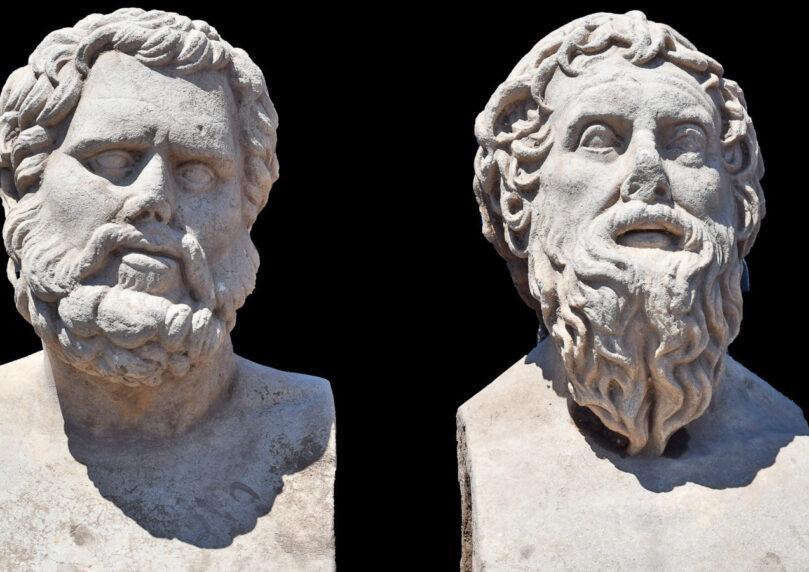

Ancient faces unseen for centuries have emerged in central Israel: an archaeological dig by the Israel Antiquities Authority near Binyamina led to the discovery of two rare marble statues, roughly 1,700 years old. The statues, depicting two figures from the ancient Greco-Roman world, were found inside a collection pit of a wine press from the Roman-Byzantine period, during preliminary excavations for a high-speed rail line along the coast.

 2+
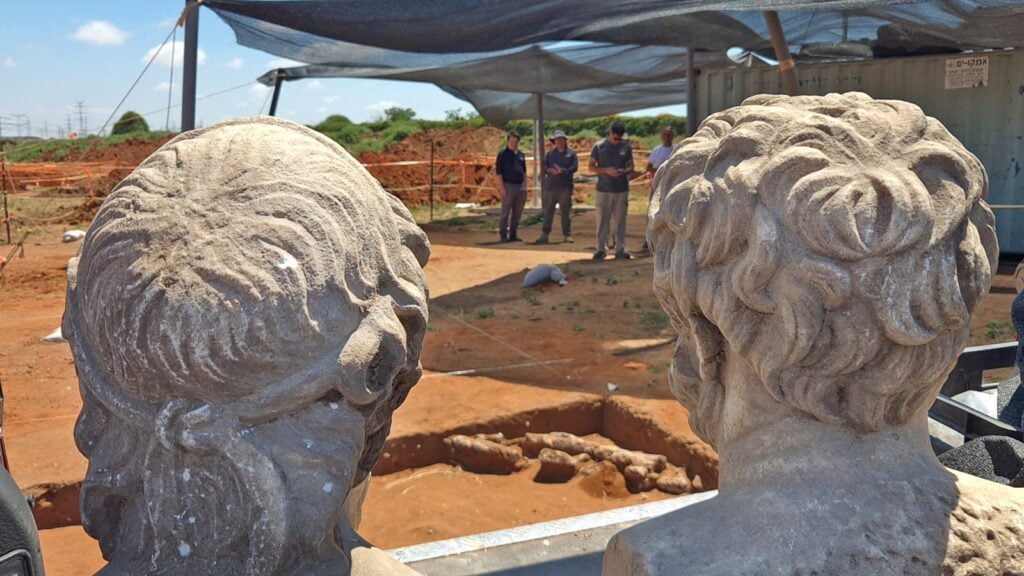
2+“During the excavation of the wine press, something stuck out from the ground and the workers called me,” recalled Michael Sorotsky, an Israel Antiquities Authority archaeologist who helped find the statues. “There was a feeling that we were about to discover something that really shouldn’t be there. Suddenly we saw it wasn’t the usual pottery—it was marble. Then, slowly, the two statues were revealed. I’m still struggling to find the right words.”
Excavation directors Eliran Oren and Avishag Reiss said the statues were found “arranged in an orderly fashion, their faces downward.” They believe the statues were deliberately buried there when the wine press went out of use, possibly to preserve and protect them from destruction. “This is a once-in-a-lifetime discovery,” the two said in a joint statement. “It was very unexpected, but somehow, the big discoveries really always pop up on the last day of the dig.”
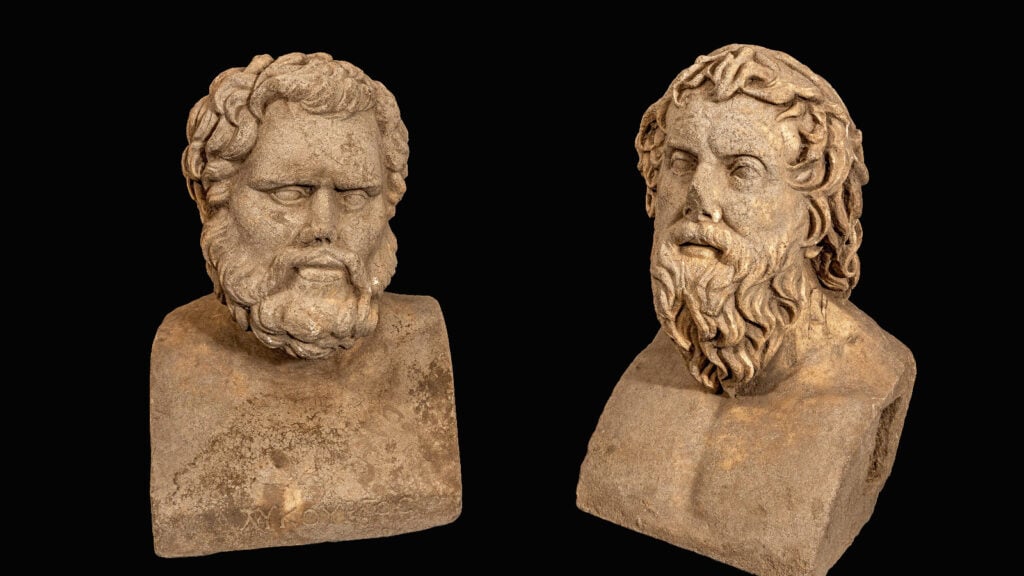
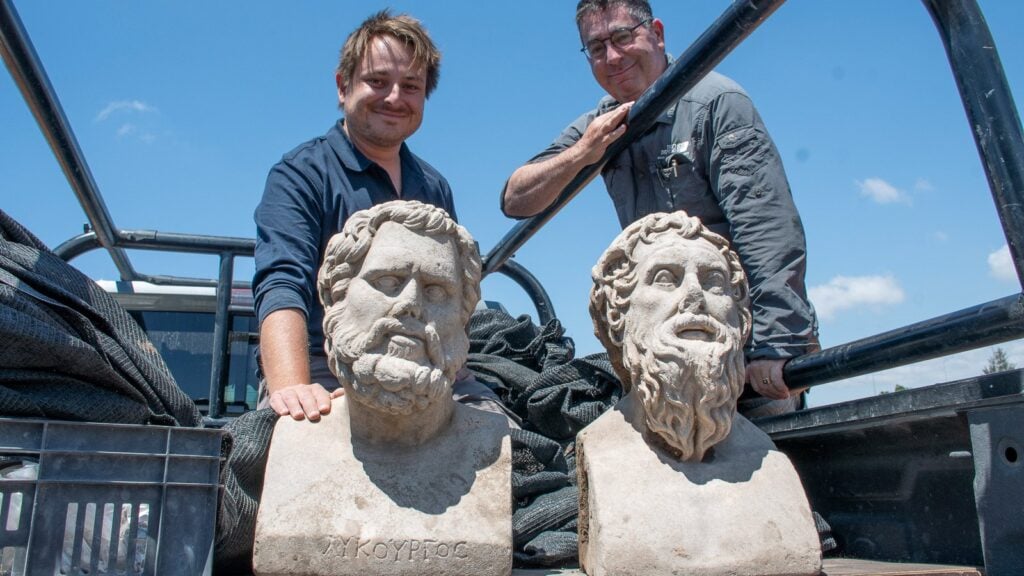
Peter Gendelman, an expert on the Caesarea region for the Israel Antiquities Authority, noted this is the first find of its kind in the area in roughly three decades. According to preliminary findings, one of the statues bears a Greek inscription with the name “Lycurgus.” Gendelman explained the name could refer to two different historical figures: Lycurgus of Sparta or Lycurgus of Athens. “It’s possible this statue will prove the connection to one of these two figures, but our research is only beginning,” he said.
 2+
2+The Roman statues uncovered in Binyamina | Photo: Yuli Schwartz, Assaf Peretz, Israel Antiquities Authority
Experts believe the statues were originally displayed in public buildings or in the homes of wealthy residents during the Roman period, as a way for the local elite “to connect themselves to the cultural and spiritual world of antiquity.” Gendelman added that remains of a bathhouse were previously uncovered not far from the discovery site, so it’s likely the statues adorned a luxurious villa belonging to one of ancient Caesarea’s residents. Israel Antiquities Authority researchers are now working to clean and preserve the statues before they undergo more in-depth analysis aimed at definitively determining the identities of the figures.
 2+
2+The Roman statues uncovered in Binyamina | Photo: Yuli Schwartz, Assaf Peretz, Israel Antiquities Authority
The discovery of the statues in Binyamina is the latest in a string of extraordinary finds announced by researchers in Israel recently. Just this past May, the Israel Antiquities Authority reported that a chance discovery by a child hiking in the Negev Desert led to the identification of a fragment of a figurine from the Roman period, also roughly 1,700 years old. Around the same time, archaeologists uncovered an ancient tunnel, “mysterious and impressive,” near Jerusalem, in an area associated with the biblical Kingdom of Judah.