


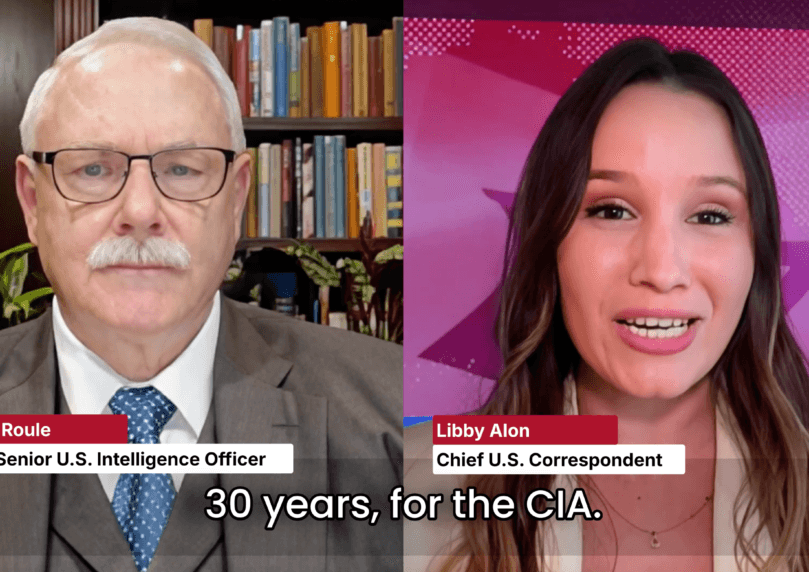

In the crowded field of foreign-policy flashpoints, Iran keeps generating more alarm than almost any other. The new US-Iran Memorandum of Understanding, and what it means for Tehran’s reach across the region, has sharpened a set of hard questions. To work through them, I sat down with Norman Roule, a former US senior intelligence officer who spent over 30 years on Iran at the CIA and now advises at the Center for Strategic and International Studies.
The MoU and its critics
Roule calls the MoU a complicated document with justified critics, largely because of what it offers Iran. As he frames it, the agreement puts the administration in a bind: it has to show the deal is reversible, narrow, and capable of producing consequential results, whether through a process or through specific Iranian actions. Fail that test, and the MoU starts to look like a channel handing Tehran liquidity and regional breathing room. The worry that follows is power projection through Iran’s militia network, with Lebanon at the center.
Why Lebanon is the “equity”
Roule locates the real danger in what the Revolutionary Guard is trying to protect. The Quds Force, its paramilitary arm, runs Iran’s regional militias, and Lebanon is the equity the Guard wants to protect. He draws a sharp contrast: the previous government failed to protect its militias when Israel struck them, while this government has said since the start of the war that it would stand with them. The result is visible now, with the Revolutionary Guard backing Hezbollah, and similar activity from militias in Iraq and Yemen. The risk, in his reading, is that a deal aimed at peace ends up cementing an Iranian position that Tehran later exploits across Iraq, Yemen, and the ‘Palestinian’ arena through Hamas.
“Israeli intelligence has saved American lives” – Israel-American intel collaboration is “architecture”
On intelligence cooperation, Roule is unequivocal. There is no question, he says, that Israeli intelligence has saved American lives, not only in conflicts but in preventing terrorist attacks against US targets in the homeland itself, and the United States has done the same for Israel. He describes the recent strikes as the product of an entire intelligence architecture rather than any single operation: signals, geospatial, human, and open source feeding an all-source collection effort that proved extremely effective.
Rhetoric is cheap, concessions are quiet
When I asked him about the leaked IRGC boast that Iran had brought President Trump to his knees, Roule didn’t flinch. Rhetoric is cheap, he said, and the IRGC has to talk that way to motivate its base and justify its concessions. The concessions are where he points instead. For years Iran refused any military-to-military contact in the Gulf, insisting the US had no business in the region. But Trump’s negotiations produced a working hotline, something Tehran had denied multiple administrations. It may look minor. He reads it as a real shift.
An ice cube vs. an iceberg
The gap that defines the whole process, for Roule, is one of scale. Iran can claim a win cheaply, with a few tankers of oil or a billion dollars in released funds. The United States is asking for transformational change to the nuclear program, the ballistic missile program, and the militias. As he put it, Iran gets success by moving an ice cube, while Washington has to move an iceberg. Change on the US side will come slower by design, which is why IAEA access on the ground, set against the regime’s rhetoric, becomes the test that actually matters.
The path forward
Roule is blunt that the IRGC is no partner for peace. What he sees instead is a chance to lower the temperature and give Iran room to move toward where its own population wants to take it. He points to the country’s near-annual nationwide unrest, heroically waged against heavily armed security forces, as evidence that Iranians want change, and as a near-certainty that the pressure on the regime will continue. His advice for Washington is to slow down and lean on partners who live with the consequences: the Gulf states absorb the missiles and drones when Iran lashes out, and they have decades of hard experience reading Tehran. Handle Iran as a team, he argues, not alone.
The C14 Israel Debrief is Channel 14’s English interview show, available on Youtube, Spotify, Apple, and other platforms.