



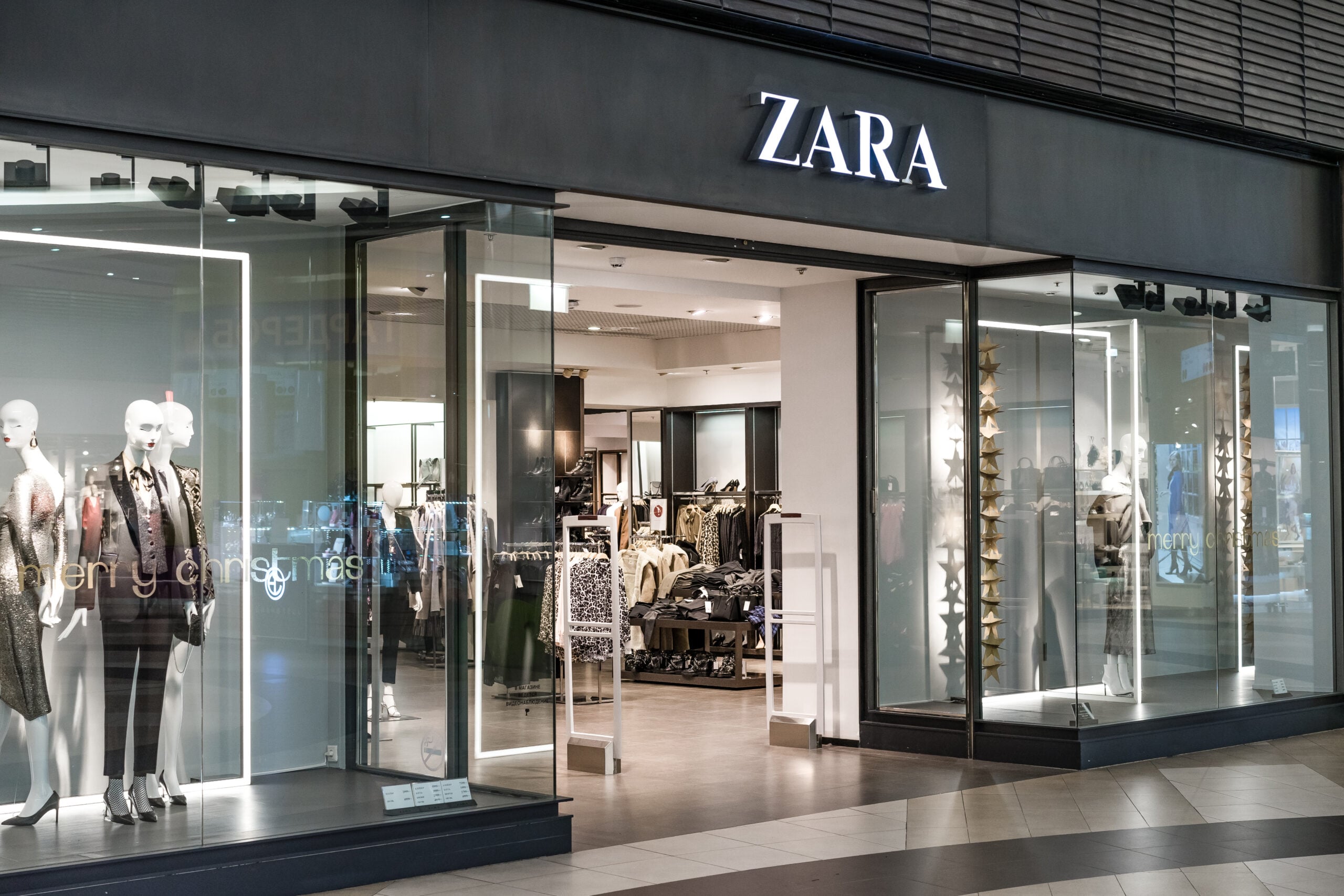
Zara’s sale starts this week. But before Israelis rush to grab the discounts, a look at Zara’s European websites raises one simple question: How is it possible that the exact same item sells in Israel at prices 90% higher—sometimes nearly double?
A comparison we conducted between Zara Israel and Zara sites in Spain, Greece, and Italy reveals gaps that are hard to explain. We’re not talking about different items, different collections, or isolated promotions—these are the exact same products. The result: even after sale discounts, Israeli consumers keep paying far more.

 6+
Take a denim jacket selling in Israel at a full price of ₪329, dropping to ₪197 during the sale. In Spain and Greece, that same jacket sells at just €49.95—about ₪169. In other words, Israel’s regular price is roughly 94% higher than Europe’s. After the discount, the gap becomes even starker: in Spain the price drops to about ₪110, and in Greece to about ₪101. That means even after the Israeli sale, consumers here pay nearly double.
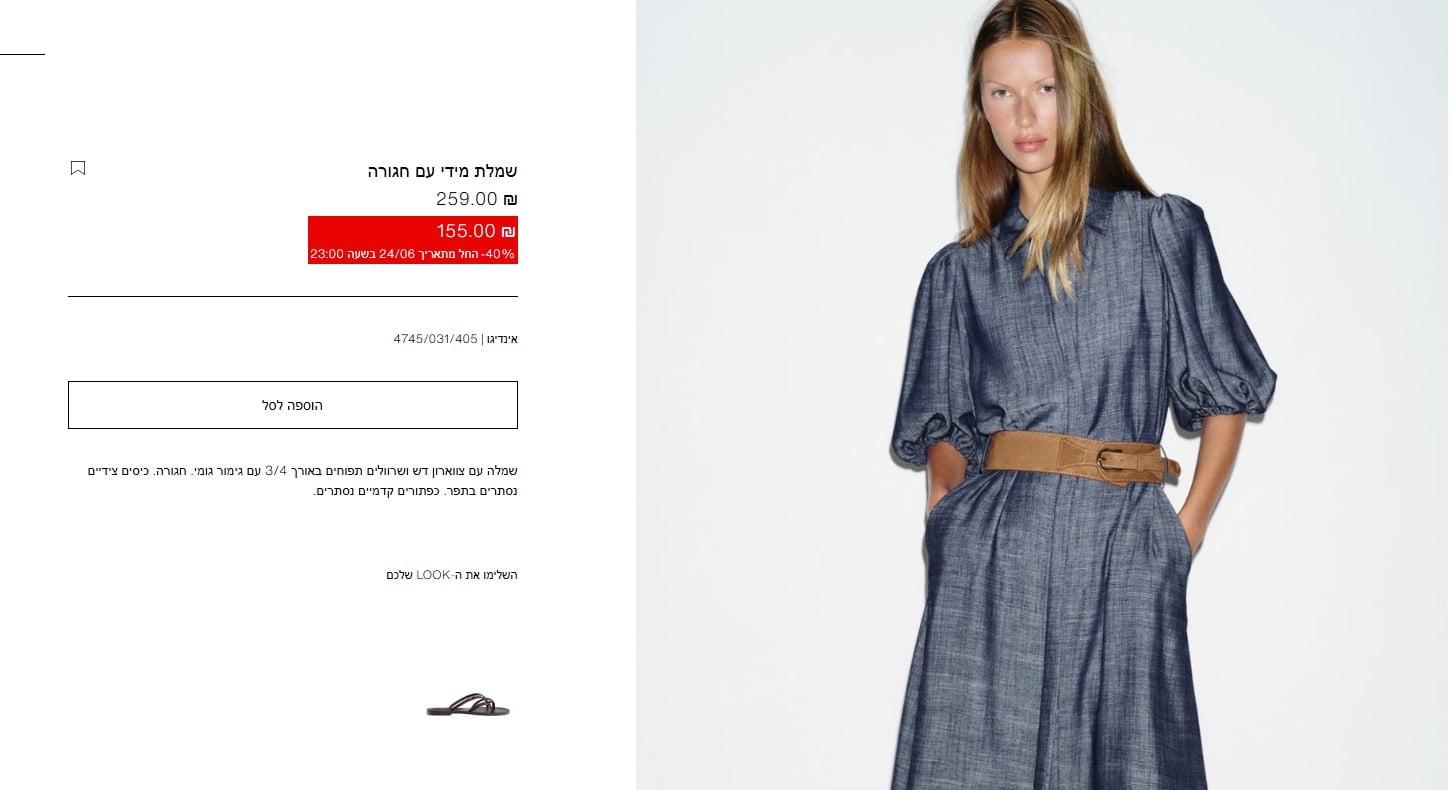
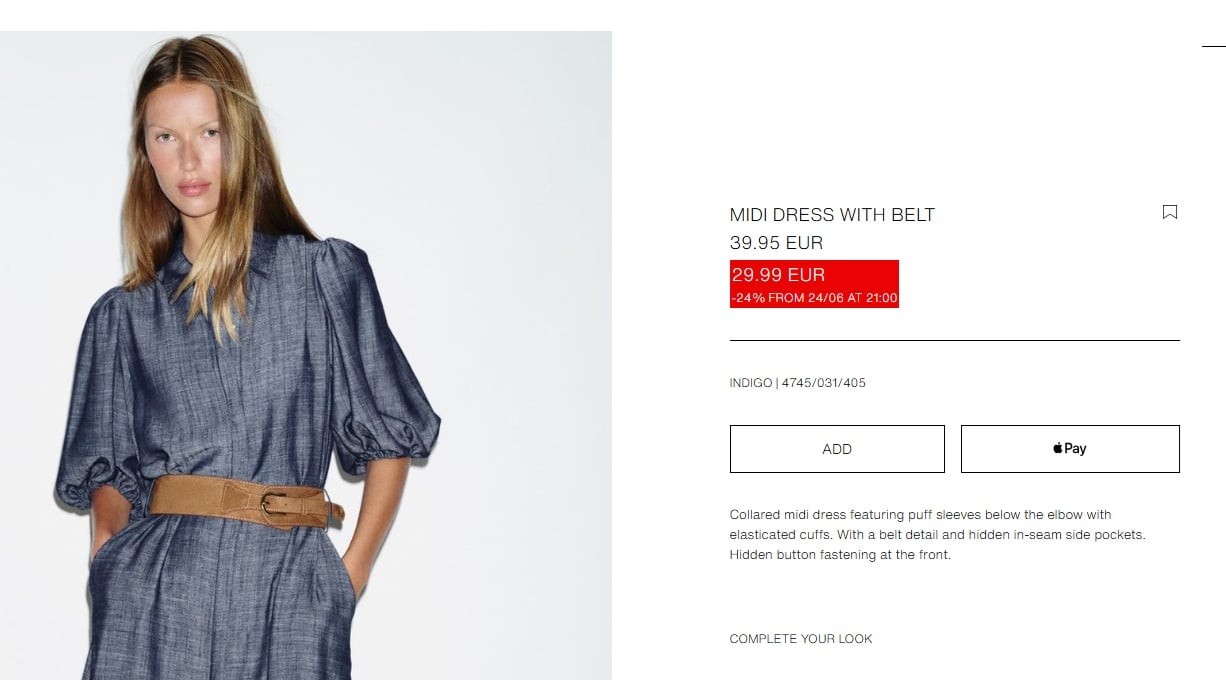
Another check revealed a similar gap for a long denim dress. In Israel it sells at a full price of ₪259, while in Spain the equivalent price stands at just ₪135—a gap of about 92%. Even after discounts the picture doesn’t change: in Israel the price drops to ₪155, while in Spain it sells for about ₪88. In Greece the price stands at about ₪101, and in Italy even less—about ₪88.
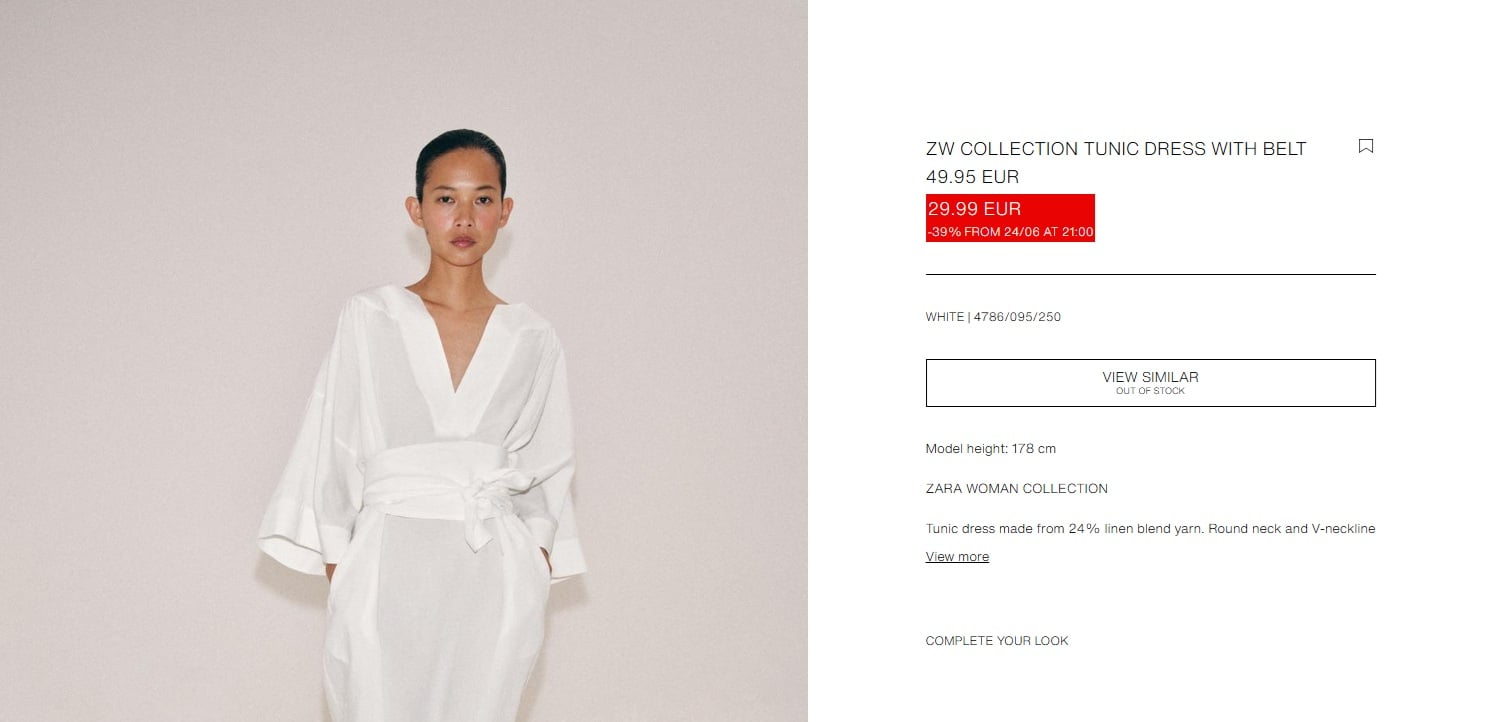
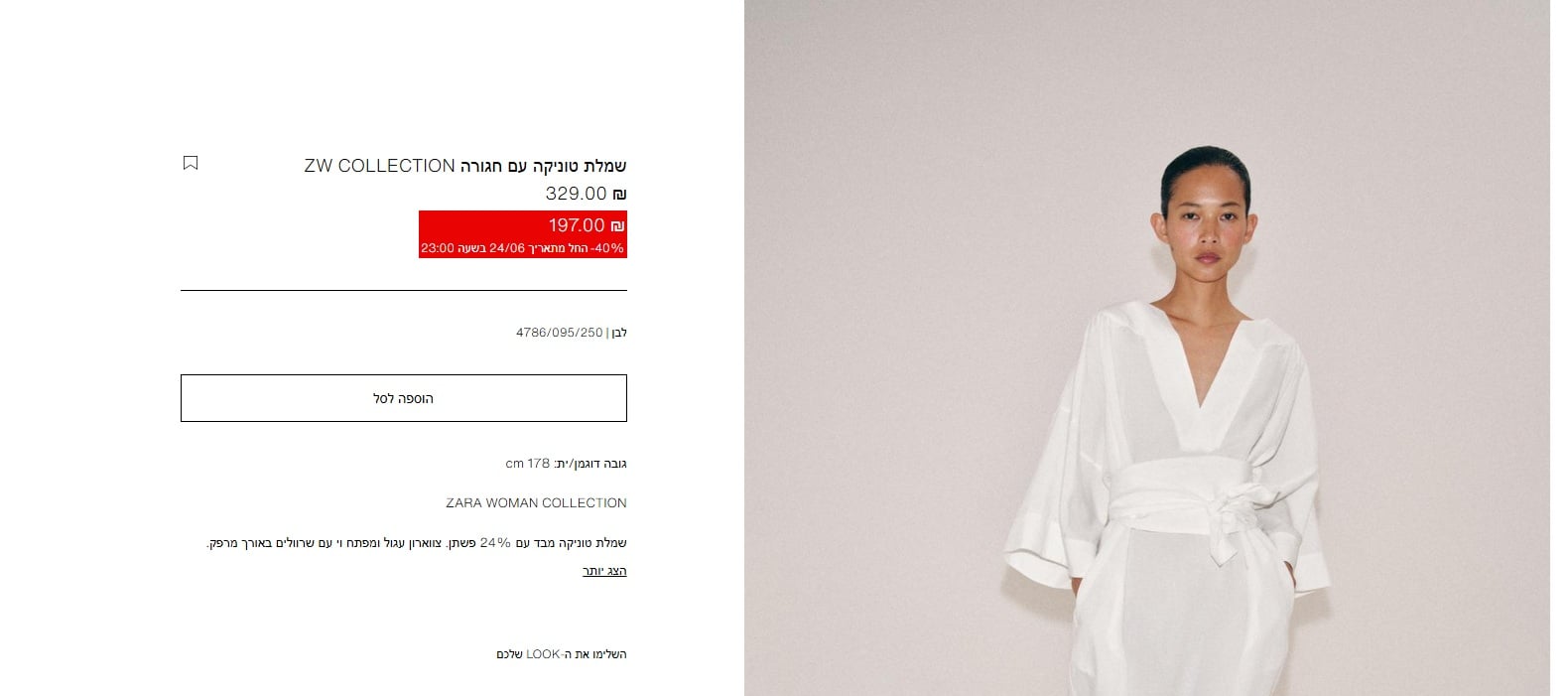
A tunic dress we checked shows the same pattern. In Israel the full price is ₪329. In Spain the price stands at just ₪169—a gap of about 94%. During the sale, Israel’s price drops to ₪197, while in Spain it stands at just ₪101. In other words, Israeli consumers pay about 95% more for the exact same item.
 6+
 6+
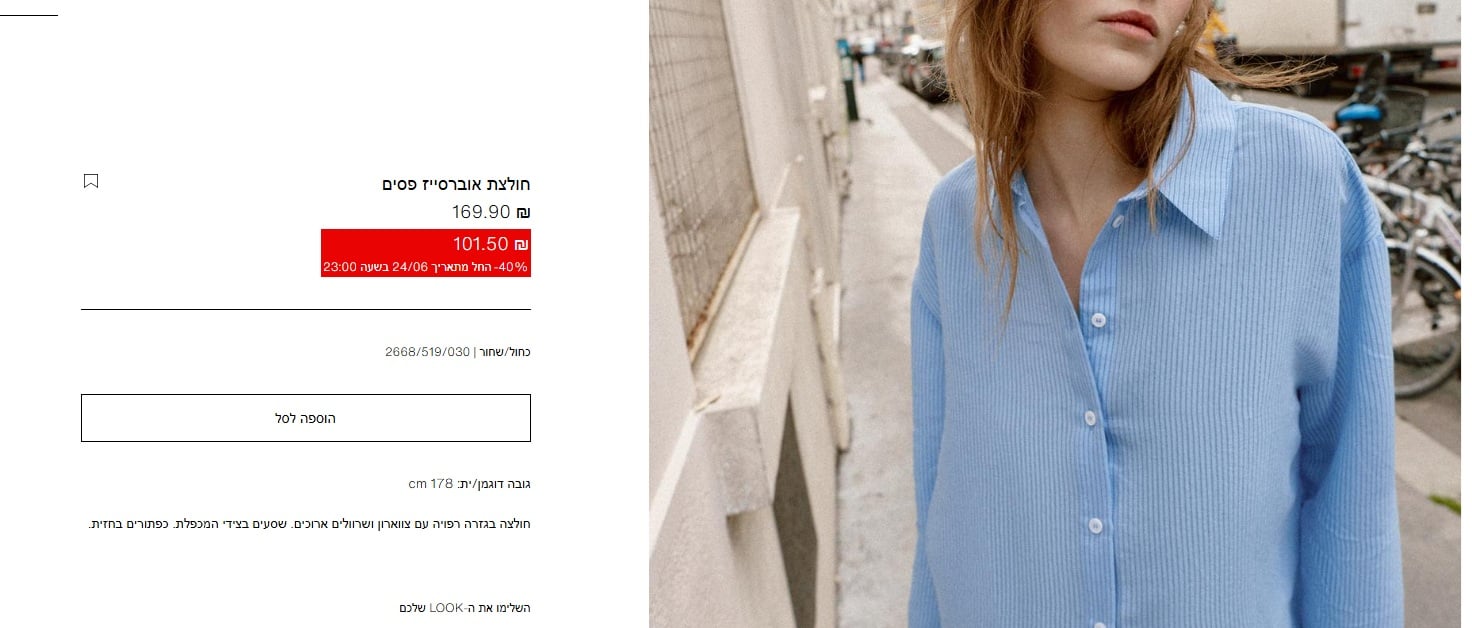
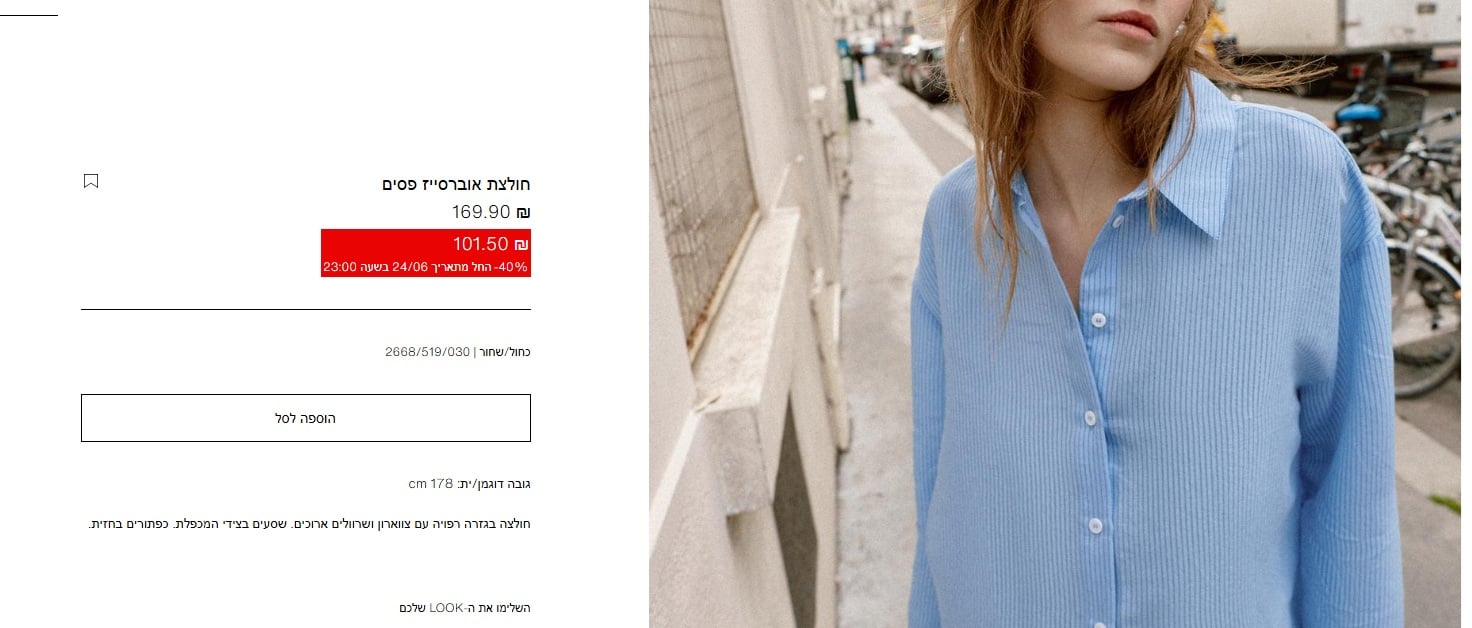
And if anyone thinks the gaps stem only from end-of-season sales, another check proves otherwise. A button-down shirt selling in Israel for ₪101 as part of the sale sells in Italy at that exact price—but without any sale or special discount. In other words, what’s presented in Israel as a “sale” price is sometimes the everyday price in Europe. The same goes for a men’s shirt that costs ₪167 on sale at Zara Israel while at Zara Italy, with no sale, it costs ₪135.
It’s hard to find justification for such gaps. We’re talking about the same chain, same items, same raw materials, and same production lines. Despite this, Israeli consumers are asked time and again to pay far more—and even when they get a “discount,” they still find themselves paying prices higher than regular prices in parts of Europe.
 6+
 6+
The absurdity grows even larger when you factor in flight prices to Europe. In many cases you can find flights for just a few hundred shekels. When price gaps on a shopping basket of several items reach hundreds of shekels, this is no longer just a feeling of being shortchanged—it’s a real consumer question: Have prices in Israel lost all connection to the chain’s global prices?
For many consumers, the answer is already clear. More and more Israelis are ordering from Zara sites in other countries using third-party shipping services. In some cases, even after shipping costs and taxes, the deal still works out better than buying in Israel during a sale.
 6+
 6+
In the end, the story here isn’t just Zara. It reflects a broader phenomenon where Israeli consumers are asked to pay far more for the exact same products. But when the gaps reach 90% and more, it’s hard not to feel that someone simply decided Israelis would agree to pay any price.