


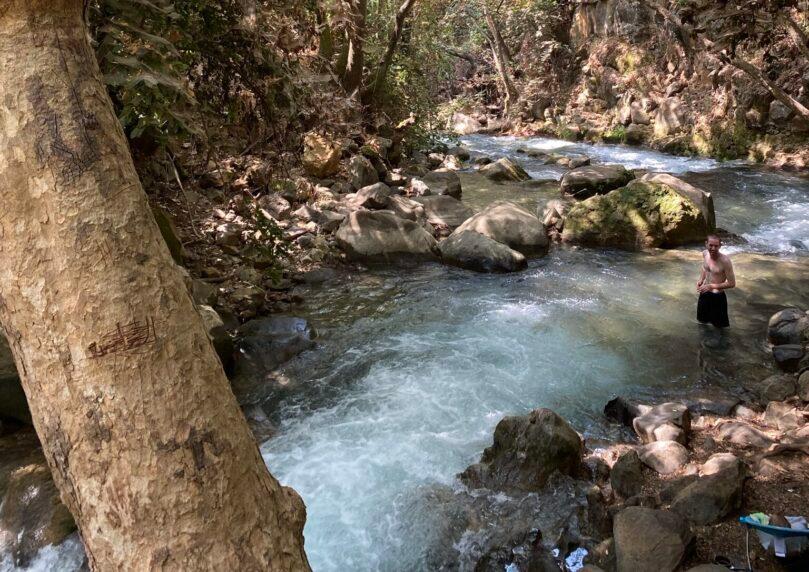

The Health Ministry and Environmental Protection Ministry issued a public warning Tuesday following alarming water test results from samples taken June 22 at streams across northern Israel. Tests found high concentrations of fecal coliform bacteria, indicating water contamination that poses health risks to swimmers. According to Health Ministry guidelines, the recommended threshold is up to 400 fecal coliform bacteria per 100 milliliters of water. But several popular sites showed significantly higher levels.


 2+
Which Sites Showed Violations
The tests found the following results:
Banias – Kfar Salad Bridge: 550 bacteria per 100 ml.
Hatzbani – Gan HaTzafon: 680.
Meeting of the Rivers Promenade (entrance to the Jordan): 2,500 – the highest level measured.
Jordan River – Gesher Yosef: 1,100.
Gesher Lahavot HaBashan: 1,900.
Gesher HaHamisha: 1,050.
Gesher HaPakak (Huri): 420.
Metzad Ateret: 470.
Gesher Arik: 440.
Hexagon Pool: 1,800.
Jilbon – Devorah Falls: 620.
Zaki: 470.
Yehudiya: 430.
Tzalmon – Flour Mill: 1,100.
 2+
Which Sites Should You Avoid?
Following the findings, the Health Ministry and Environmental Protection Ministry are urging the public to avoid entering the water at these sites:
Banias – Kfar Salad Bridge.
Hatzbani – from Gan HaTzafon to the Meeting of the Rivers Promenade.
Jordan River – from Gesher Yosef to Gesher Arik.
Hexagon Pool.
Nahal Jilbon.
Zaki.
Nahal Yehudiya.
Nahal Tzalmon in the Flour Mill area.
What Are the Health Risks?
Exposure to contaminated water can cause a range of symptoms including diarrhea, abdominal pain, vomiting, fever, skin infections, and sometimes more serious infections—especially among children, the elderly, and people with weakened immune systems.
 2+
Source of Contamination Still Unknown
The Environmental Protection Ministry said no known contamination source has been found that could explain the violations measured. Sampling is conducted routinely every two weeks by Nature and Parks Authority inspectors at fixed points throughout the Galilee and Golan. The Health Ministry and Environmental Protection Ministry said they will continue sampling and monitoring water quality, and will update the public as developments unfold.