


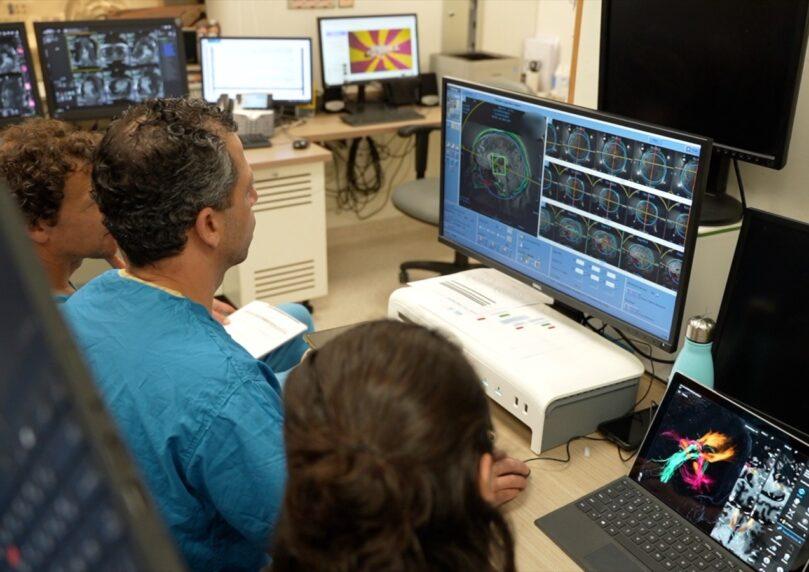

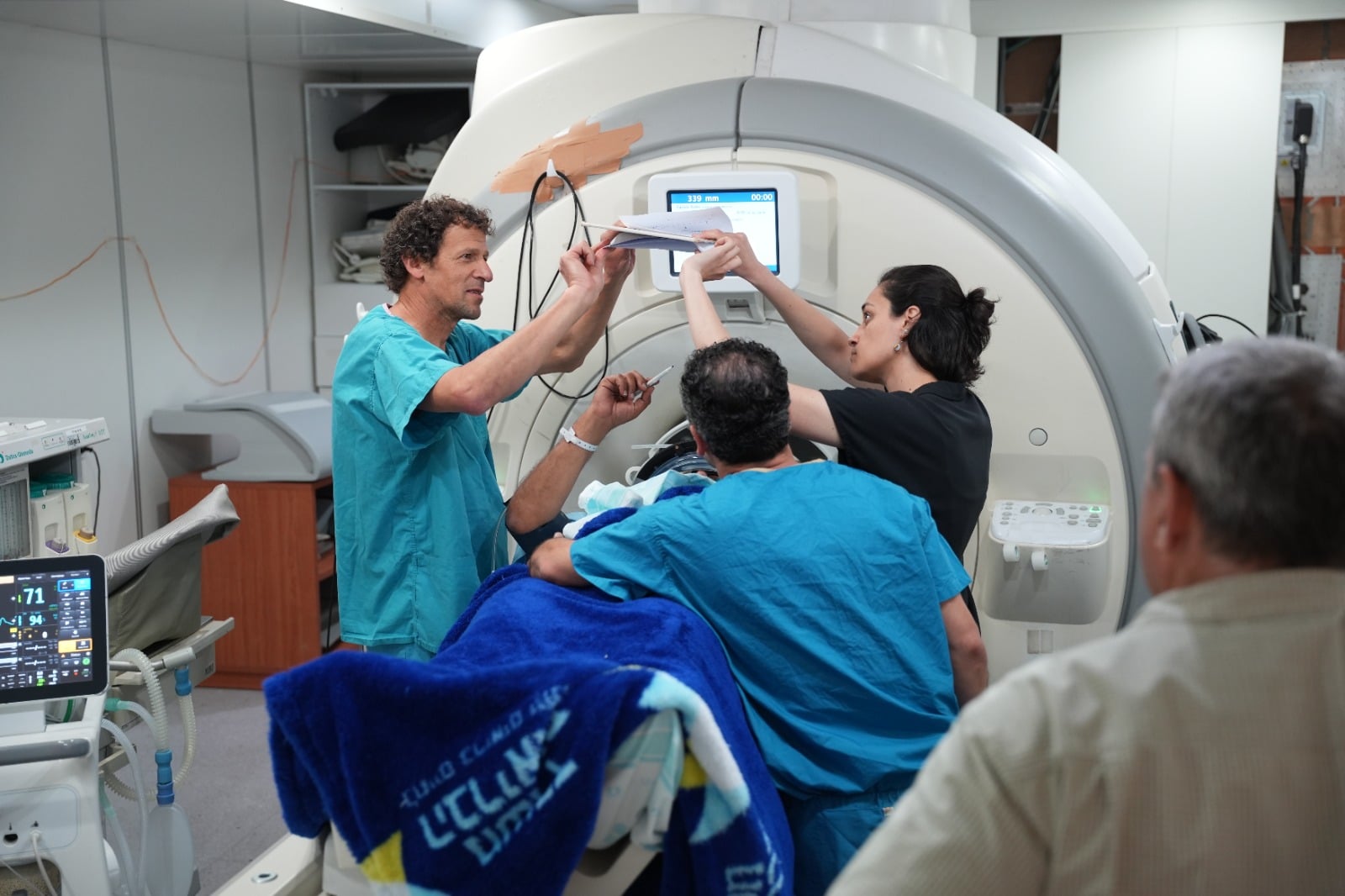
A team of specialists at Rambam Medical Center in Haifa achieved a medical breakthrough today (Tuesday), curing a patient of severe opioid painkiller addiction using an innovative treatment that took just 20 minutes. The procedure—the first of its kind in Israel—uses Israeli technology from Insightec and is part of an international study being conducted at a small number of medical centers worldwide.

 4+
4+The patient, a man in his 40s from northern Israel, developed a severe addiction to painkillers after suffering a neck injury several years ago. Though the original pain subsided over time, his dependence on the drugs intensified until he was consuming around 130 pills a day. “Over time the pain decreased, but he couldn’t break free from dependence on the pills and the doses kept growing,” explains Dr. Amir Minerbi, director of the Institute for Pain Medicine at Rambam. “At a certain point he no longer needed the drugs because of pain, but because of the body’s need for the substance itself.”
Targeted Intervention in the Brain’s Reward Center
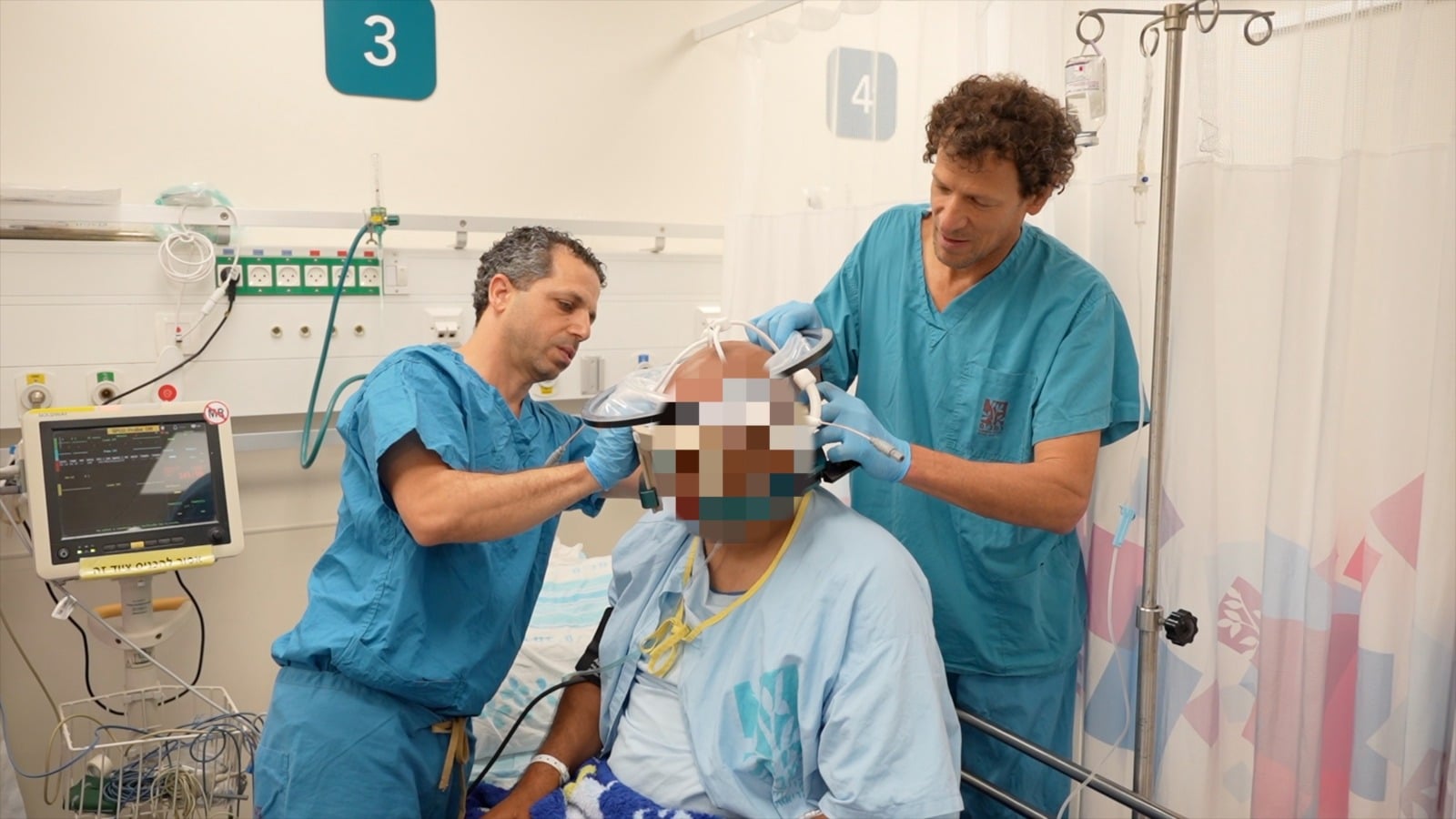
During the treatment, doctors used focused ultrasound technology that allows precise influence on the activity of deep brain regions without surgery and without inserting devices into the body. The treatment targeted a brain area called the nucleus accumbens, considered a central hub in the reward, pleasure, and addiction system. Unlike existing FUS treatments used for essential tremor and Parkinson’s through tissue heating, this case employed a new neuromodulation technology that doesn’t destroy tissue but temporarily and controllably alters its electrical activity.
 4+
4+According to Dr. Lior Lev Tov, director of the Functional Neurosurgery Unit at Rambam and lead researcher in Israel, a significant drop in the patient’s craving for the drug was observed during the treatment itself.
Dramatic Results
A week after the procedure, the patient’s lab tests came back negative for opioids and other substances. The patient himself reported that his urge to consume the drug dropped to zero out of ten. Alongside the opioid withdrawal, another interesting phenomenon occurred: the patient reported a sharp drop in his desire to smoke, from three packs of cigarettes a day to a minimal amount, as well as the disappearance of his urge to consume alcohol.
 4+
4+“We’re talking about a dramatic change that occurred within a few minutes,” says Dr. Lev Tov. “Our patient was completely weaned from an extreme dependence that accompanied him for years. From his perspective, he got his life back.”
Global Opioid Addiction Epidemic
Addiction to opioid drugs is considered one of the most severe health crises in the world. In the United States alone, the epidemic has claimed hundreds of thousands of lives, and the economic damage it causes is estimated at tens of billions of dollars annually. Opioids are used to treat acute and severe pain, but in some patients prolonged dependence and addiction can develop. This addiction can lead to a significant decline in quality of life, functional impairment, and even increased risk of morbidity and mortality.
 4+
4+Currently, withdrawal treatments are based primarily on gradual reduction of the drug or switching to alternative medications. However, success rates are limited, and the withdrawal process can be prolonged and challenging.
New Platform for Treating Additional Diseases
The study in which Rambam is participating is being conducted simultaneously at three medical centers in the United States and Israel. So far, the results have shown encouraging success rates, including among patients who suffered from severe heroin addiction. The researchers believe the technology’s potential extends far beyond addictions.
 4+
4+Because it allows targeted influence on deep neural networks in the brain without an invasive procedure, it may be possible in the future to use it also for treating obsessive-compulsive disorder (OCD), post-traumatic stress disorder (PTSD), eating disorders, treatment-resistant depression, chronic pain diseases, and even neurological diseases like Parkinson’s and Alzheimer’s.
According to the research team, this is a new therapeutic platform that could change the way medicine addresses a wide range of neurological and psychiatric diseases, and offer patients precise, targeted, and non-invasive treatments.