


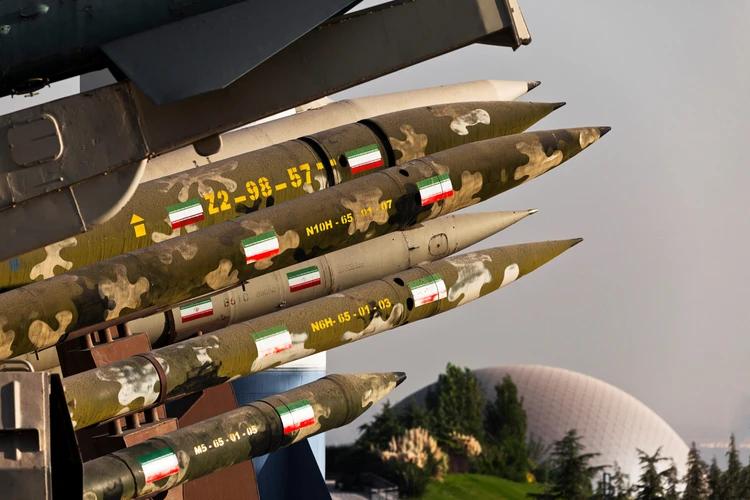

A new report released Thursday by Iran International details the workings of the “hate machine” produced by Tehran’s regime. The report provides a glimpse into how it all began, what the overarching goals were, and how the aspiration to destroy Israel became the central engine.


 3+
On the tombstone of Hassan Tehrani Moghaddam, the man known as the “father of Iran’s missile industry,” words are carved that leave no room for interpretation: “Here lies the man who wanted to destroy Israel.”
For four decades, with broad autonomy granted by senior officials, Revolutionary Guards personnel invested enormous efforts in building infrastructure with one sole purpose: offensive capability. Tehrani Moghaddam, who was close to Hezbollah’s Imad Mughniyeh, began laying the foundations for the program as early as 1986, knowing the ultimate goal was Israel’s destruction.

Ali Larijani, who was the organization’s first director, was later dubbed a “politician-philosopher.” Current missiles are based on models purchased from Ukraine, North Korea, and China during President Mohammad Khatami’s era, when the Shahab-3 missile—with range to Israel—was also unveiled.
Base Deployment: An Operational Network Beyond Just Missiles
While President Khatami preached “dialogue among civilizations,” Mohammad Baqer Ghalibaf dug tunnels and built underground warehouses in the Zagros Mountains—complexes that earned the nickname “missile cities.” During President Hassan Rouhani’s tenure, Revolutionary Guards Air Force commander Amir Ali Hajizadeh continued expanding the array and production sites in Shahrud and Khojir, while simultaneously developing threats to shipping in the Strait of Hormuz.
 3+
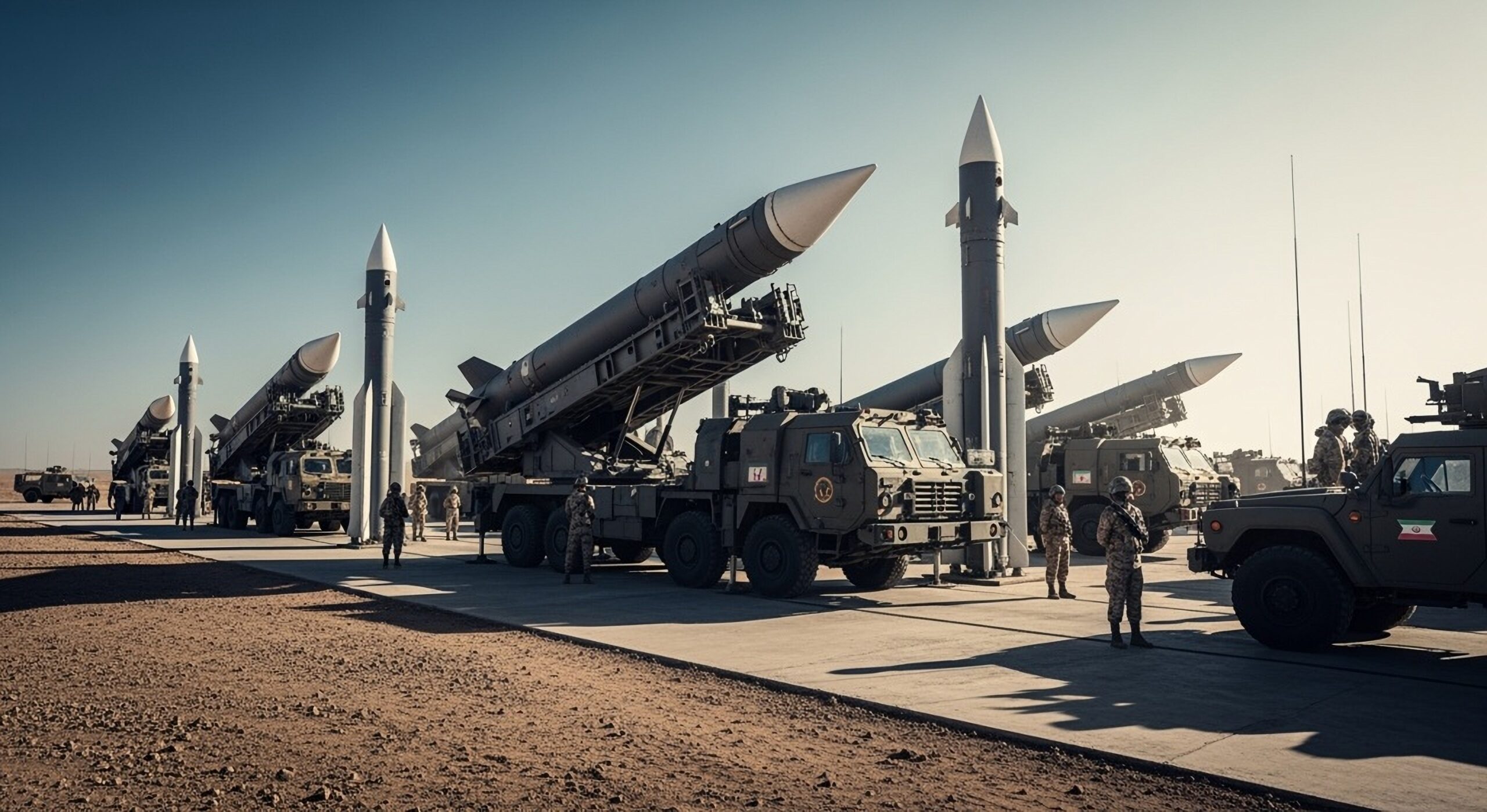
Iran has roughly 30 missile bases. The array includes not just missiles, but an operational network of launchers, command centers, communications systems, guidance, and intelligence. Experts from organizations like INSS and Alma mapped the bases, which consist of concrete bunkers, mountain communications systems, and refueling equipment. This array was designed to penetrate air defense systems using tactics such as separating warheads and mid-course maneuvers.
The Northern-Central Axis: Research and Production Hub
The complexes in Shahrud, Garmsar, Khojir, and Parchin form the central research and development axis. Khojir, spanning 40 square kilometers, is considered one of the most important sites, with the nearby “Hakimiyeh” production complex integrating metal industries and missile fuel. The Parchin area, also known for its connection to the nuclear program, suffered significant damage in Israel’s recent operations.
 3+
The “De Turkman” complex in Khojir was defined in studies as a center for producing solid rocket motors. During Operation “Days of Repentance,” dozens of buildings were hit. The Shahrud site, where industrial missile engines and fuel are produced using rotary mixers, also suffered severe damage in strikes during recent operations, leading to destruction of equipment vital for solid fuel production.
Tehran and Isfahan Clusters
West of Tehran sits the Garmdarreh base and the Bidganeh complex (Hemat Modarres), where Tehrani Moghaddam was killed in a 2011 explosion. These complexes, involved in research and development, were attacked in both wars. In the Isfahan area sits the largest production and assembly complex, which suffered extensive destruction. Estimates indicate over 50% of its infrastructure was destroyed even before the second war.
 3+
The Ahmad Kazemi base, stretching eight kilometers and including tunnels dug into mountains, suffered severe damage documented in aerial photographs. The Baharestan base south of Isfahan, which includes facilities shared by ground forces and the missile array, also suffered damage to tunnels and buildings. The Mobarakeh complex, which was well-protected, was exposed to damage in core buildings and the tunnel area.
The North and West: Strategic Borders
Around Tabriz operate three bases, including the Al-Zahra (Amand) base serving as a central storage site, and the Southern Missile Base facility built on an old air defense site. These facilities suffered over 50% damage during the wars. In the Kermanshah area, the veteran Panj-Peleh (Imam Hassan) base and the Tanga-Qansht base, with dozens of bunkers (“igloos”), were hit, with some tunnels built in recent years.
The Qomijeh base, a relatively small facility in the Harsin area, includes tunnels built starting in 2016. Two main bases also operate in the Shiraz area—the northern one near Bajgah and the southern one near Kafari. The northern base, equipped with missile silos, was severely damaged, while the southern base suffered only minor damage.
The Center, South, and Naval Threat
In central Iran, the Qom, Kashan, and Khomeyn bases stand out. Most buildings at the Khomeyn base were destroyed, and the Kashan base also suffered damage to building roofs. The “Imam Ali” base in Khorramabad, also called the mountain missile city, was severely damaged in strikes. During the war in Operation “Rising Lion,” dozens of Revolutionary Guards personnel were killed there, including senior commanders, and its facilities were attacked again in Operation “Roaring Lion.”
The southern cluster, including the Borazjan, Hormog, Jam (Chamran), Lar, Hajiabad, and Khorgoo bases, was designed to threaten the Persian Gulf and Strait of Hormuz. These bases are characterized by silos and vertical launchers for underground launches. In Operation “Roaring Lion,” nearly all southern bases were hit. Despite the start of rehabilitation work, as of several months ago, Iranian capability to threaten the southern Gulf remained limited due to damaged tunnels and infrastructure.