


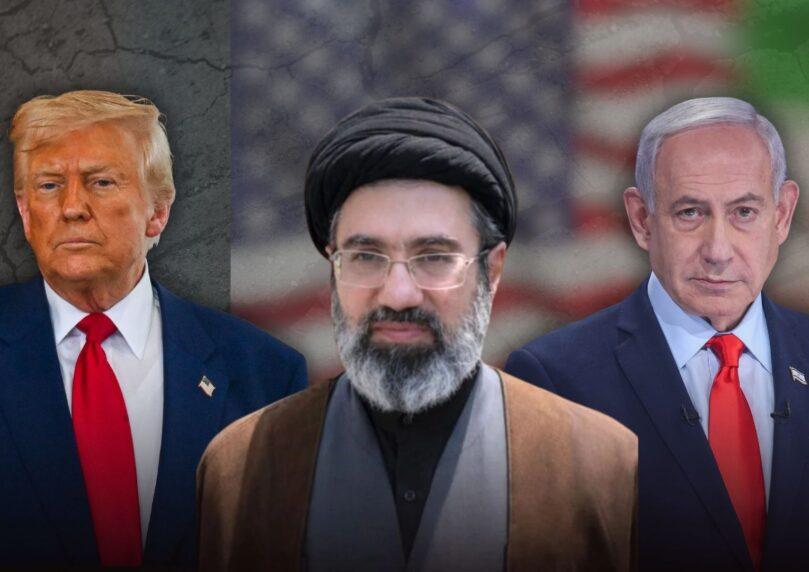

The memorandum of understanding between the United States and Iran, signed by Presidents Donald Trump and Masoud Pezeshkian, is raising serious concerns in Israel. While Tehran is celebrating the deal and presenting it as a strategic achievement, Jerusalem is maintaining public silence for now—but behind the scenes, sharp criticism is being voiced over a series of provisions in the document and their security, political, and economic implications.
Trump Signs Iran Memorandum of Understanding at Versailles
🚨 President Donald J. Trump has SIGNED the Iran Memorandum of Understanding at Versailles in France. 🇺🇸 pic.twitter.com/JQ6qlbvFAF
— The White House (@WhiteHouse) June 17, 2026
One of the main provisions drawing opposition in Israel is the American decision to grant sanctions waivers on Iranian oil exports as soon as the memorandum takes effect. Under the agreement, the U.S. Treasury Department will issue licenses allowing Iran to sell oil and petroleum products and conduct related transactions in banking, insurance, and shipping. Israeli officials estimate the move will funnel billions of dollars into the Iranian economy, precisely after a period when it was under severe economic pressure.
The nuclear issue is another focal point of concern. The agreement does not require Iran to remove its stockpile of enriched uranium from its territory, but instead stipulates that it will be handled through dilution under International Atomic Energy Agency supervision. Israel sees this as a retreat from positions previously presented by Washington and fears Iran will effectively retain a significant portion of its nuclear capabilities under a future arrangement.


 1+
The provision dealing with Lebanon is also sparking controversy. The memorandum stipulates that the parties will work to end military operations on all fronts, including Lebanon, and commit to refraining from mutual military actions. Israel is concerned about the linkage created between the Iranian arena and the Lebanese arena and the possibility that international pressure will be applied in the future to restrict the IDF’s freedom of action in southern Lebanon. That said, officials in Jerusalem note that the agreement does not at this stage require an immediate withdrawal of Israeli forces from the territory.
Meanwhile, Tehran has not hidden its satisfaction with developments. Iranian Parliament Speaker Mohammad Bagher Ghalibaf claimed Iran is entering negotiations from a “position of strength,” declaring that “victory on the ground is the basis for negotiations.” According to him, Iran has succeeded in imposing a new reality in the region and is now enjoying an improved status in the international arena.
 1+
Iranian Foreign Ministry spokesman Esmail Baghaei also delivered a forceful message regarding Lebanon, warning that continued Israeli activity in Lebanese territory could be considered a violation of the memorandum of understanding. Tehran even emphasized that from their perspective, any continuation of Israeli strikes in Lebanon will be tested against the new agreement.
Israeli officials have criticized the outcome of the move and argued that Iran is the main beneficiary of the agreement. According to them, the economic relief, the ambiguity on the nuclear issue, and the expected pressure on Israel in the Lebanese arena give Tehran significant achievements even before a final agreement is signed. At the same time, security officials estimate that if the understandings do indeed lead to a significant slowdown of Iran’s nuclear program and a reduction in support for proxy organizations in the region, alongside the risks there may also be long-term strategic advantages.