


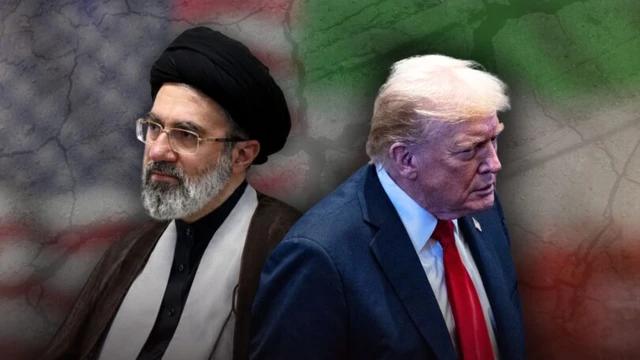

The Saudi Al-Arabiya network published today (Tuesday) the document it defines as the “draft understanding between Washington and Tehran.” The memorandum presents a complex framework for “de-escalation” intended to stabilize the Middle East in the short term.
According to the document, the US and Iran agreed to a cessation of hostilities on all fronts, including in Lebanon, and an Iranian commitment to ensure freedom of navigation in the Strait of Hormuz, in exchange for significant relief from economic sanctions and the possibility of Iran returning to the global oil market, all under the definition of “interim understandings” only intended to buy time for the parties.
According to the publication, the agreement is based on graduated steps designed to build trust, while setting clear timetables and detailed mechanisms of action: the parties agree on a ceasefire for a period of 60 days, which can be renewed or changed by mutual agreement. Special emphasis is placed on the immediate end of military operations on all regional fronts, including in the Lebanese arena, as a first step towards a comprehensive regional de-escalation.
Regarding the opening of the Strait of Hormuz, Iran undertakes to remove mines and naval obstacles and ensure safe passage for oil tankers and commercial vessels without paying additional fees. Iran assumes full responsibility for implementing the technical and security measures required to clear the strait. The goal is to return vessel traffic to pre-escalation levels within a period not to exceed 30 days. In this context, Iran emphasizes its commitment to its “sovereign rights” in the strait in accordance with international law — a point that is still under technical discussion between the parties.
In addition, the US will grant specific exemptions from sanctions that will allow Iran to export oil and resume economic activity. Partial release of frozen Iranian assets and funds will be carried out in the first phase, in accordance with a financial mechanism to be agreed upon by both sides. At the same time, the parties will work to gradually remove restrictions on Iranian ports within 30 days, under “agreed verification mechanisms” acceptable to both sides.
The parties also agree to conduct intensive negotiations over the next 60 days with the aim of formulating long-term agreements on nuclear activity, inspection mechanisms and mutual obligations, while maintaining the current status quo throughout the period of calm.
Despite the optimistic picture reflected in the draft, the document reveals deep unresolved differences that could torpedo the entire process — with the American military presence constituting the biggest minefield. The draft explicitly states that the parties “continue to discuss” the security and military arrangements related to the American presence in Iran’s vicinity. This is a critical point of disagreement that remains unresolved at this stage and constitutes a constant point of friction between Washington and Tehran.
The very requirement that the “verification mechanisms” be “agreed upon” by both sides raises questions among experts. If the supervision of the Iranian concessions depends on Iran’s agreement on how they will be implemented, there is a serious concern that the supervision will be limited, toothless, and will not allow the US to verify that Iran is indeed meeting its commitments on the ground.
While Iran is committing to clearing the strait, it continues to emphasize its sovereignty over it. This means that even if there is a lull, Iran is preparing the ground for a continued claim to ownership of the strait, which could lead to renewed friction as soon as regional politics change.
It is important to emphasize that these are only “interim understandings.” The document does not offer a permanent solution to any of the strategic issues, but rather serves as a tool for mutual time-buying. This is a cautious first step designed to “buy silence,” with the Iranians receiving critical “economic oxygen” in the form of oil exports and the release of funds, and the US recording a small achievement in stabilizing the sea lanes and preventing a full-scale flare-up.