


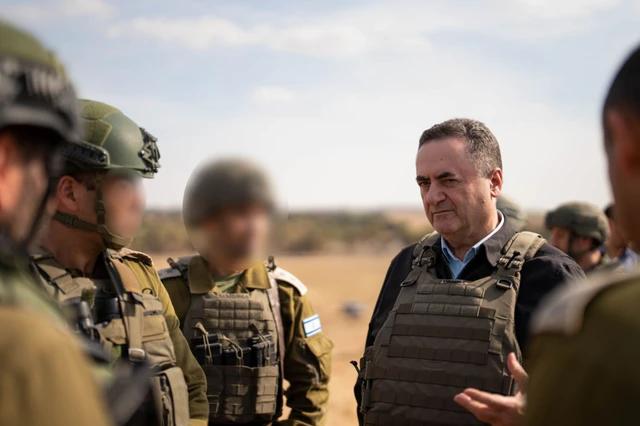

Defense Minister Yisrael Katz stated today (Monday) Israel’s clear policy regarding Iran, Gaza, Lebanon and Syria, saying that the IDF will remain in all security zones, despite the pressures being exerted on the political echelon. The minister emphasized that a similar message was conveyed directly to US President Donald Trump and US Secretary of War Pete Hegseth.
In his remarks, Defense Minister Israel Katz presented an aggressive and uncompromising line regarding how the State of Israel’s new security zones will look beyond its borders. Katz detailed the practical significance of the new strategic territorial concept: “Prime Minister Benjamin Netanyahu and I are leading a clear policy that determines that the IDF will remain in the security zones in Lebanon, Syria, and Gaza – indefinitely – in order to protect the border and Israeli settlements from there against jihadist elements. The area will be cleared of local residents and all terrorist infrastructure, above and below ground – including the houses in the contact villages that served as terrorist outposts – will be destroyed.”
Katz emphasized that the government will not yield to external dictates and will not withdraw from the security zones despite all the existing and future pressures on the country, and issued a direct and public ultimatum to the leadership in Tehran in the event of a widespread security deterioration: “If Iran attacks Israel due to the events in Lebanon, we will attack it with all our might and clearly demonstrate to it the power gaps. We are committed only to our citizens and the security of the State of Israel. We will not compromise on Israel’s supreme security interest and the protection of our citizens, and we will not withdraw from the security zones.”
At the end of his remarks, the Defense Minister chose to challenge the internal political system in Israel, and called on the leaders of the opposition to present their public position in a transparent manner to the voters: “If there are elements in the opposition who challenge this security concept and support the IDF withdrawal – let them stand up and say so that the public can judge between the positions.”
Minister Katz’s remarks come against the backdrop of the announcement that the United States and Iran have reached a dramatic framework agreement establishing an immediate ceasefire. As part of these interim understandings, brokered by Qatar and Pakistan, Washington agreed to lift the naval blockade it imposed on Iranian ports and grant Tehran a temporary exemption from oil sales. While Iran has pledged to reopen the Strait of Hormuz to international shipping without charging fees and to work to clear the waterway of naval mines, the current agreement creates a tough 60-day window of opportunity, during which the parties will be required to conduct intensive and critical negotiations on the most complex issues that remain open, primarily the dismantling of Tehran’s nuclear program, the future of its enriched uranium stockpile, and a permanent arrangement for the removal of economic sanctions.