


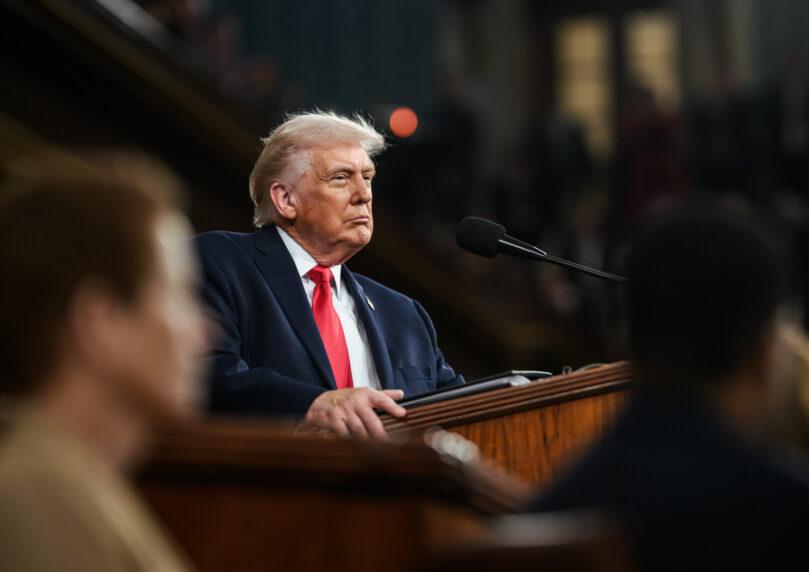

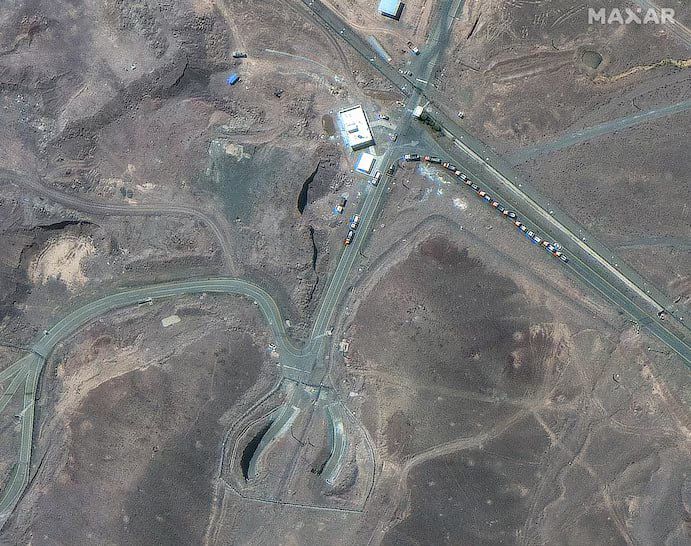
President Donald Trump said Thursday that U.S. intelligence is maintaining close, continuous satellite surveillance of Iran’s destroyed nuclear facilities, particularly the heavily damaged Fordow enrichment plant hit in airstrikes in June 2025.

 5+
5+During a White House cabinet meeting focused on a potential ceasefire agreement, Trump said the uranium buried roughly 260 to 330 feet underground poses no immediate threat, since any approach to the area would be detected instantly. The president’s statement came just one day after the White House launched a sharp attack on Bloomberg, following a Wednesday report claiming that nuclear inspectors’ inability to visit the sites increases the risk of Iranian rearmament.
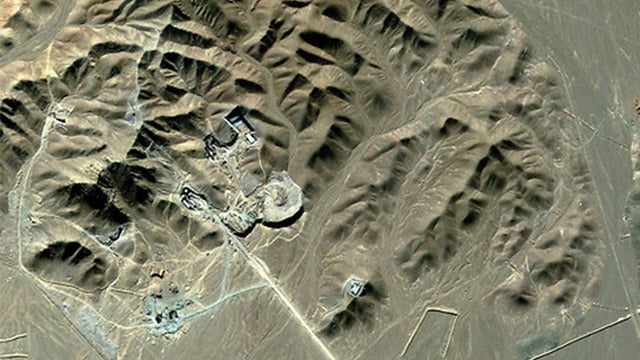
Trump partially lifted the veil of secrecy surrounding the U.S. Space Force’s operational activities monitoring Iran’s destroyed nuclear infrastructure. According to him, the U.S. has positioned advanced satellites aimed directly at the enrichment sites, enabling close surveillance at a resolution level that doesn’t allow the Iranians to make any move under the radar.
 5+
5+The president detailed the scope of technological surveillance and eased public concerns: “Space Force has very powerful cameras pointed at Iran’s destroyed nuclear sites, and they’re looking for any attempt Iran might make to break through to the enriched uranium that’s still buried deep down. Every inch of that ground is covered by cameras.
“We have about nine of them, and they’re working, and we’re covering it. So if anyone even gets close to it—we’ll know what we need to do. I don’t think Iran could have stopped us if we wanted to, but there’s no reason for that. We have very powerful cameras.”
 5+
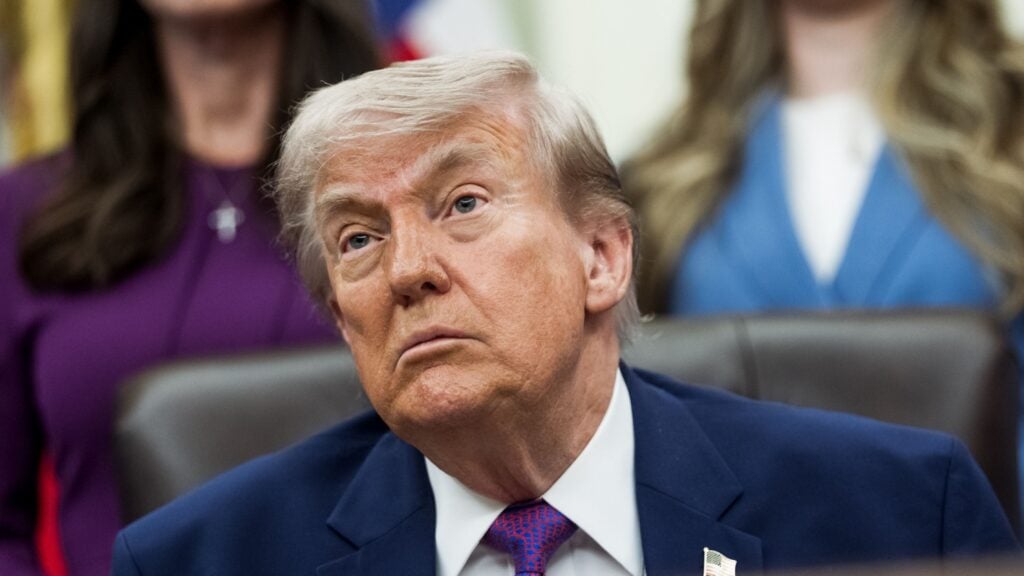
5+In his remarks, the U.S. President revealed that early in the campaign, before the U.S. military destroyed Iran’s entire military and defensive apparatus, the possibility of launching special forces on a covert mission to seize and extract the enriched uranium from the underground bunkers was seriously considered. However, professional assessment showed this would be completely different from other rapid operations the U.S. has carried out around the world.
Trump explained the engineering and military risks that led to canceling the ground operation: “We thought about doing it right at the beginning, because they wouldn’t have noticed, but they would have discovered it later. It’s not like Venezuela where you go in, you’re there for a matter of minutes and you’re out. This is different. You’d need to be there for two weeks, and you’d need massive equipment.
 5+
5+“You’d have to fly the equipment in by airlift, and you know you’re in a war zone. It’s a major construction operation that would have taken a week to two weeks. We would have achieved it, but I said I don’t like that idea. They still had missiles left, and that means they would have been targeting the forces and kept throwing them in until one penetrated, and people would have been killed.”
Trump’s disclosure about the technological surveillance measures was intended to counter a wave of media criticism that arose following a Bloomberg report. The report claimed that because international nuclear inspectors can no longer conduct physical inspections and monitoring at Iranian nuclear sites following the destruction strikes, the country is actually at higher risk than ever of obtaining nuclear weapons.
 5+
5+White House Deputy Press Secretary Anna Kelly pushed back on the report in blunt, forceful language: “The claim that Iran is better able to produce nuclear weapons precisely when it has no functioning nuclear enrichment facilities or military defenses is an incredibly stupid analysis from Bloomberg. We would have shared this data with them if only they had contacted us for comment before publication.”
Alongside the statements, official sources confirmed that information about the surveillance level is being shared with allied nations, while the U.S. continues to conduct diplomatic contacts from a position of absolute military strength on the ground.
 5+
5+For years, Iran built its enrichment sites deep inside bunkers carved into rock and mountains, based on a scientific and tactical concept that depth of hundreds of feet underground would provide absolute immunity from Western bunker-buster bombs. The destruction of these systems and leaving the enriched uranium buried and trapped without independent technological extraction capability on Tehran’s part completely changed the balance of power in the Middle East and made Iranian airspace completely open to American monitoring.