



A fragile ceasefire between Israel and Lebanon took effect today, Thursday morning, hours after Washington released a joint declaration following American mediation. Israeli and U.S. officials are closely monitoring the first phase—Hezbollah’s withdrawal beyond the Litani River—as tensions flared immediately after the announcement when the group launched a hostile drone toward northern Israeli communities.
The joint statement released overnight by the State Department lays out a rigid security and political framework designed to guarantee the sovereignty and territorial integrity of both nations. Unlike previous attempts at calm, this agreement sets clear demands and on-the-ground enforcement mechanisms.
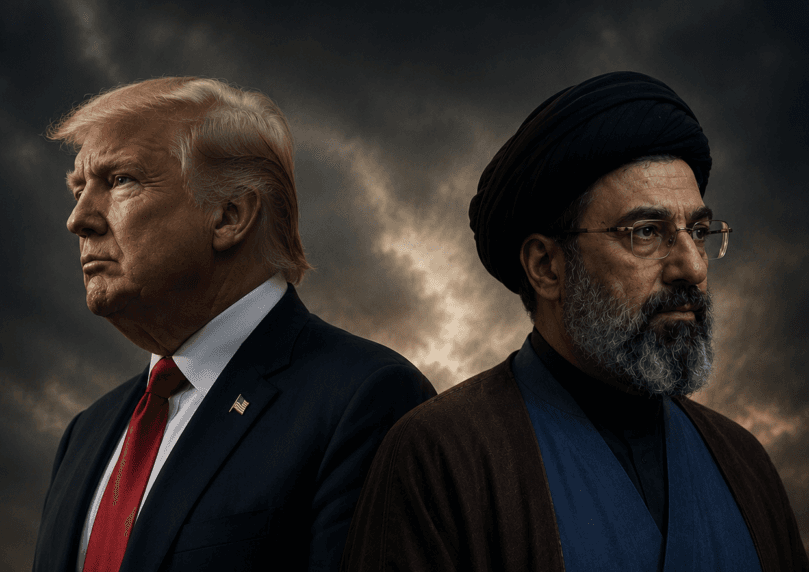
The Israel-Lebanon ceasefire represents a significant strategic move by the Trump administration against Iran, successfully cracking Tehran’s “unity of arenas” equation that it financed and led across the Middle East. Iran previously conditioned any deal with the United States—including reopening the Strait of Hormuz and dismantling its nuclear program—on a complete halt to Israeli fighting in Lebanon, aiming to use Hezbollah as a bargaining chip and human shield for its interests.
By engineering a separate agreement in Washington that forces the Lebanese government and Hezbollah to cease fire and evacuate south of the Litani, the Trump administration diplomatically and militarily isolates Iran, strips it of its central proxy, and forces the regime of Mojtaba Khamenei into direct negotiations with the powers from a distinctly inferior position, unable to hold Israel’s northern border hostage.
Key provisions agreed between the delegations in Washington:
- Evacuation south of the Litani: Complete withdrawal and evacuation of all Hezbollah terror militia operatives and infrastructure far from the southern Litani sector.
- Pilot areas under state sovereignty: Rapid advancement of control zones where the official Lebanese army will assume exclusive security responsibility, while distancing and preventing the reappearance of non-state armed groups.
- Resumption of the political track: The delegations agreed to reconvene political and security working teams the week of June 22 to resolve all outstanding issues and build mutual trust.
The parties made clear in their statement that Lebanon’s future will no longer be held hostage by external actors, and sharply condemned Iran’s actions destabilizing the Middle East through support for proxies.
Despite the formal signing in Washington, events on the ground quickly suggested the ceasefire remains fragile. After the White House announcement, Hezbollah launched an unmanned aerial vehicle toward northern Israel—a move Jerusalem saw as an attempt to establish facts on the ground and demonstrate presence.
Meanwhile, Lebanese security sources reported that Israeli drone strikes continued in the southern region, alongside a targeted hit on a vehicle spotted traveling south of Beirut. Iranian Foreign Minister Abbas Araghchi rushed to respond in an interview with Lebanon’s Al-Mayadeen network, warning that Tehran will respond decisively and firmly if Israel chooses to strike directly inside Beirut.
The Israel-Lebanon ceasefire doesn’t stand alone—it’s part of a far broader strategic move by the Trump administration attempting to bring the overall war between the U.S. and Israel against Iran to an end. Tehran previously conditioned any deal with the Americans on a complete halt to fighting in Lebanon, and now President Trump is trying to separate the issues to reopen the Strait of Hormuz.
Before reaching the agreement, Iran’s Revolutionary Guards launched a severe attack using missiles and drones against Kuwait International Airport, causing heavy damage to facilities, shutting down flights, killing one person and injuring more than 60.
While Iran claimed the destruction came from failed American interceptor missiles, the Pentagon rejected the claims and made clear it was a deliberate Iranian attack, responding with barrages of “defensive strikes” in southern Iran and Qeshm Island. Trump expressed optimism in a podcast interview about a deal with Tehran, noting that Supreme Leader Mojtaba Khamenei is involved in talks and that Iran has agreed not to possess nuclear weapons, and even hinted to White House reporters that significant progress in negotiations with Iran could happen as early as this coming weekend.