


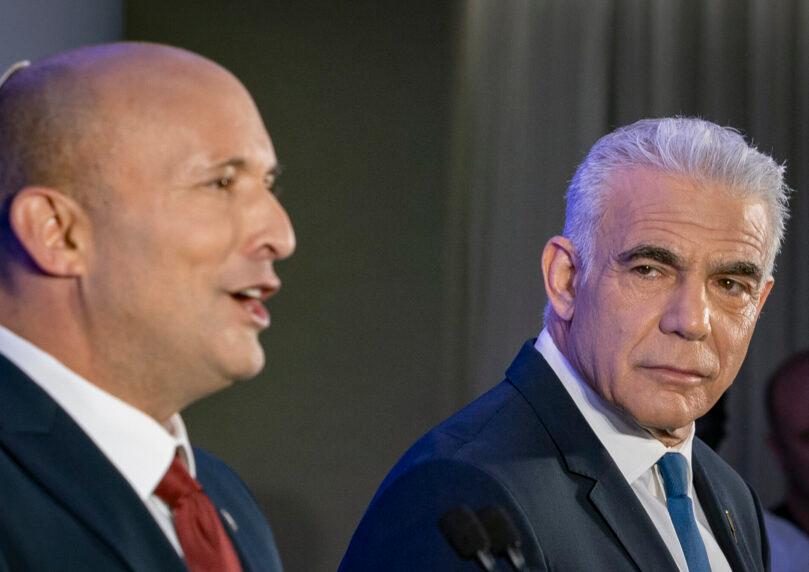

Political analyst Shlomo Filber painted a grim picture Wednesday night for former Israeli Prime Minister Naftali Bennett, saying his standing in the center-left bloc is deteriorating rapidly.
Speaking on Yaara Zered’s program on Channel 14,” Filber said recent polling data shows a consistent pattern of decline. “We’re seeing Bennett and his party bleeding one to two seats every week. This is happening across the board, and it will continue for at least another two weeks,” he said.

Filber pointed to a dramatic turning point coming soon in the mandate map: “The big drama should happen in the next two to three weeks, the moment Gadi Eisenkot passes Bennett in the polls. From the moment that happens, Bennett’s story as the bloc’s candidate is over.”
*”Bennett Doesn’t Belong”*
According to Filber, Bennett’s legitimacy within the center-left camp rested on two central promises that have fallen apart: “A year ago he promised them he knows how to bring votes from the right—they no longer believe that. The second thing was that he was the bloc’s leading candidate and therefore they needed to line up behind him. The moment these two things aren’t happening, Lapid has no reason to be there.”
Filber explained that the center-left audience sees Eisenkot as “flesh of their flesh” from the opposition and the historic Labor Party, while Bennett is perceived as a “foreign entity.” According to him, “This bleeding is happening because people prefer to choose an authentic candidate over a substitute.”
*Will the Union with Lapid Fall Apart?*
Filber cast doubt on the durability of the agreement between Yair Lapid and Naftali Bennett. Responding to host Yaara Zered’s question about whether there aren’t signed agreements and legal oversight for the move, Filber replied: “Political agreements can be broken whenever you want. This union is a word of honor between two people who stood on a podium—we haven’t seen a signed agreement.”
Filber emphasized that Lapid made painful concessions—giving up party leadership, party funding, and first place—all in exchange for a promise of ten Knesset members that Bennett was supposed to deliver. “From the moment Bennett couldn’t bring those ten Knesset members, and Eisenkot could, I don’t rule out the possibility that we’ll see a dissolution of the union agreement and Lapid moving to become Eisenkot’s number two.”