


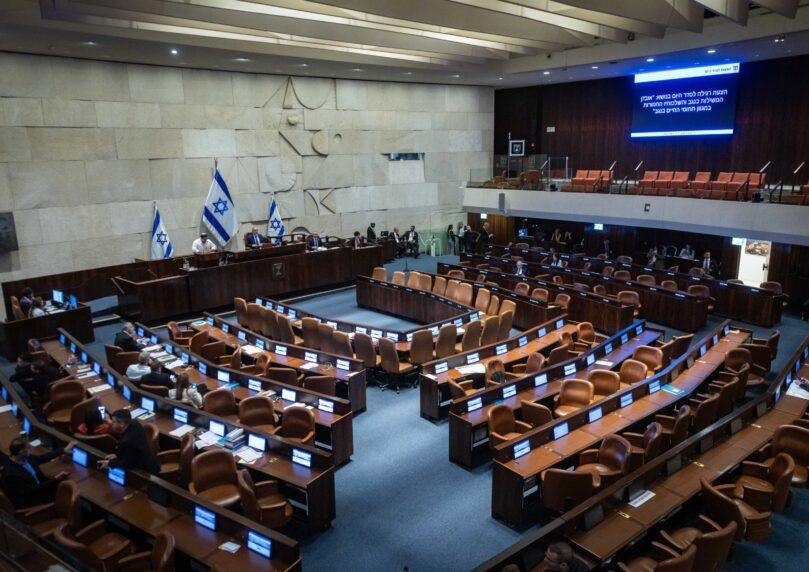

The Knesset approved the dissolution bill in a first reading overnight between Monday and Tuesday, putting the government and party system on high alert for a new election campaign. The bill is expected to come up for a vote in the Knesset plenum again today (Tuesday), and once approved, it will immediately return to committee to prepare it for final approval in second and third readings.
Immediately after, the entire political system will formally enter election campaign mode, with preparations focused on the timeline for opening the polls and elections for the 26th Knesset. At that point, the Central Elections Committee, headed by Justice Noam Solberg, will swing into rapid action. Due to the accelerated legislative process, the committee will be able to hold general elections in a shorter timeframe than the full 90 days previously required by law.
The sudden momentum the dissolution bill gained overnight is a direct result of the collapse of the draft bill in the Foreign Affairs and Defense Committee. Just two weeks ago, the Knesset plenum approved the dissolution bill in a preliminary reading with 110 supporters and no opposition, with the coalition allowing the Blue and White party bill to pass to signal to its haredi partners that it was listening to their demands. However, Netanyahu’s strategy of using the draft bill as a brake to stop dissolution failed.
Channel 14’s political desk chief Matti Tuchfeld detailed the behind-the-scenes collapse of the draft bill: “Sources close to Prime Minister Benjamin Netanyahu admit that the chances of approving the draft bill in the current term have evaporated, following the announcement last night by Rabbi Dov Landau, president of the Council of Torah Sages of Degel HaTorah, that members of his faction do not support passing the bill before elections. Netanyahu waged a fierce battle trying to save the bill and bring it to a vote anyway, but this morning Netanyahu’s people were forced to inform Foreign Affairs and Defense Committee Chairman Boaz Bismuth that the bill has effectively been blocked and will not be approved in the current Knesset.”
Now, within the coalition and facing the opposition, a solid majority is emerging for holding elections as early as September, but sharp disagreements remain over the exact date. Shas, led by Aryeh Deri, has announced it wants a date in early September due to proximity to the High Holidays, while Netanyahu is waging a prolonged battle to delay the end and settle on late October, as close as possible to the original election date.
Political correspondent Moti Kastel and desk chief Matti Tuchfeld explained that the considerations for setting September dates are particularly complex and involve sensitive logistical and sectoral considerations within the right-wing bloc: “The next possible dates, taking into account the Hebrew calendar, are September 8 and 15. This gives the Knesset an additional week or two to pass the dissolution bill, but sources in right-wing factions have expressed concern that the proximity of these dates to Rosh Hashanah could severely damage the ability of hundreds of thousands of people traveling to Uman, to the grave of Rabbi Nachman of Breslov, to participate in the elections. These are votes that mostly go to haredi parties and right-wing bloc parties.”
Meanwhile, alongside disagreements over the timeline, our Knesset correspondent Avraham Hasson reported an unusual announcement from the Central Elections Committee, headed by Supreme Court Justice Noam Solberg. The committee sought to reassure the tense political system and clarified that the timeline is flexible: “Although in all previous elections the Elections Committee was allocated a full 90 days for preparation as required by law, due to the current procedure and accelerated legislation, it will be possible to hold elections for the 26th Knesset even if the bill is finally approved in second and third readings in less than 90 days.”
Rabbi Dov Landau’s dramatic decision to block the draft bill effectively pulled the rug out from under the continued existence of the current government, proving once again that the issue of drafting yeshiva students remains a burning issue. Netanyahu, who fought tooth and nail to hold the coalition together through maneuvers in the Foreign Affairs and Defense Committee, discovered that the haredi bloc is unwilling to absorb the public and legal pressure surrounding the bill in the current term, and prefers to go to the voters.
The unexpected announcement from Justice Solberg and the Central Elections Committee, allowing the preparation period to be shortened to less than 90 days, gives the coalition and opposition unprecedented freedom of action to set a lightning-fast election date. However, the “Uman trap” could scramble the cards for the right-wing bloc: holding elections in mid-September, exactly during the week when hundreds of thousands of Hasidim and right-wingers fly to the grave of Rabbi Nachman of Breslov in Ukraine, poses a huge electoral risk that could cost the haredi and religious parties critical mandates—which is expected to increase pressure on Deri to compromise on a later date.