


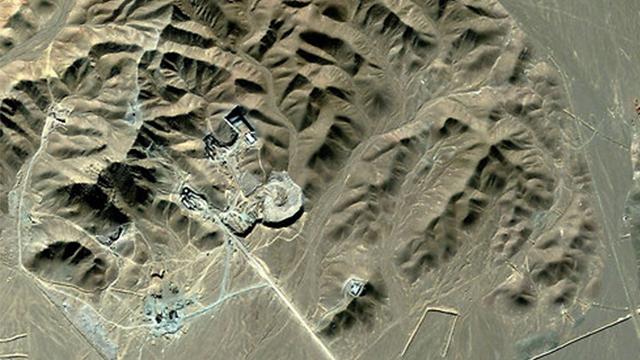

Months after Israel and the United States conducted an extensive campaign against Iran’s missile infrastructure, a new CNN report paints a concerning picture for Jerusalem: Iran has managed to restore significant parts of its underground missile network and reopen dozens of tunnel entrances that were previously damaged during the fighting.
According to the report, based on analysis of recent satellite imagery, Iran has reopened 50 of 69 tunnel entrances damaged across 18 different missile bases. During the war, the Israeli Air Force and the U.S. military focused on striking tunnel entrances, access roads, and missile launchers, understanding that destroying the underground facilities themselves—sometimes buried hundreds of meters below ground—would be an extremely complex task.
Now, however, Iranian restoration efforts appear to be advancing rapidly. Satellite images show bulldozers, excavators, and dump trucks operating around the clock to clear debris, reopen corridors, and restore roads destroyed in the strikes. At several sites, access routes damaged in the attacks have reportedly been fully repaved.
For Israel, the implication is that despite the significant damage inflicted on Iran, the ballistic missile threat has not disappeared. Experts cited by CNN estimate that Iran still holds around 1,000 missiles stored in underground facilities—a stockpile that appears to have survived much of the above-ground strikes.
Sam Lair, a researcher at the James Martin Center for Nonproliferation Studies, told the network that “Iran can continue to launch missiles as long as it has launchers and crews, even if production capabilities were damaged. It still has a large stockpile of missiles.” The report also highlights a key limitation in the strike strategy used by Israel and the United States: while tactical gains such as blocking tunnels and striking launchers reduced Iran’s firing capacity during the war, restoring infrastructure is significantly cheaper and faster than the munitions used to destroy it.
In Israel, officials have tracked Iran’s “missile cities” project for years—a vast network of underground bases built over more than two decades. The project is designed to ensure launch capability even in the event of a large-scale surprise attack by Israel or the United States. Some facilities are carved deep into mountains and rock, making complete destruction extremely difficult.
The main concern is that, after another recovery period, Iran could restore much of the damaged network to operational status while also rebuilding production capabilities. According to CNN, U.S. intelligence assessments already indicate that Tehran is working to resume drone production, replace lost launchers, and establish new manufacturing capacity.
An American official quoted in the report said the Iranians have “advanced all timelines estimated for the reconstruction process,” a statement that could raise concern in both Washington and Jerusalem.