


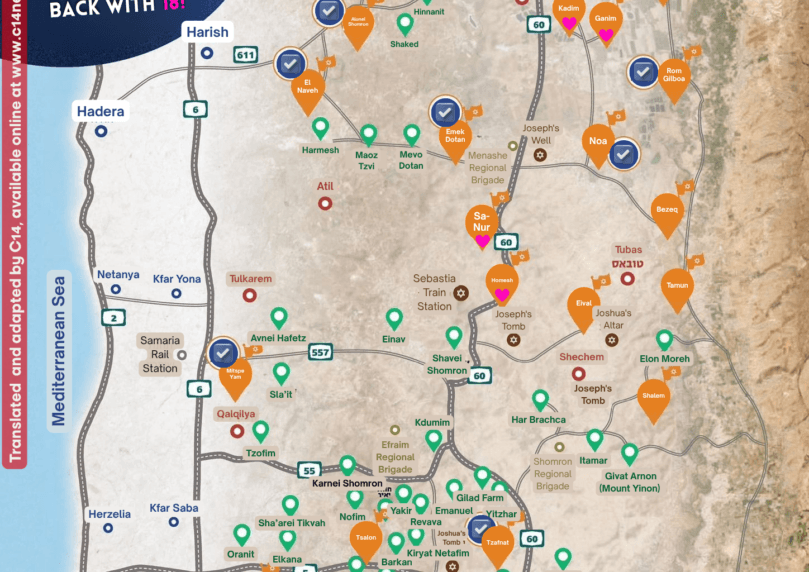

Twenty-one years after Israel’s disengagement from its heartland forced the expulsion and destruction of Jewish communities in northern Samaria, Governor Yossi Dagan is launching what he calls the “Reconnection Plan”— a direct counter to the 2005 pullout.
Under the plan, 18 new towns will be established in the area, including the four communities uprooted in 2005: Homesh, Sa-Nur, Ganim, and Kadim, plus 14 new communities. Some have already received government approval. The rest are pending cabinet authorization.
The Samaria Regional Council, working with the Amana movement and the Israeli government, has spent recent months forming community cores through an organized work plan. Once the government gives final approval, residents will move to the new communities – some this summer, others later.


The Samaria Million:
The layout emerged from the council’s Samaria Million plan, launched in recent years to bring one million residents to the region. The plan puts heavy emphasis on northern Samaria, based on the belief that Israel would repeal the disengagement law and restore community life to the area—something now already happening on the ground.
What seemed unrealistic to many in the political establishment just a few years ago is becoming reality. Discussions have moved from theoretical stages to practical preparations for moving onto the land, planning educational institutions, and absorbing hundreds of families. Leading the effort is Samaria Governor Dagan, who was himself expelled from his home in Sa-Nur and recently returned when the community went back up.
For 20 years—from the “Homesh First” days through his three terms as Governor—Dagan has worked to repeal the disengagement law. Now, Dagan leading the return to Israel’s ancestral heartland alongside Finance Minister Bezalel Smotrich and Defense Minister Israel Katz.
Dagan said: “Re-establishing the communities is the state returning to its foundational values—Zionism, building the land, Judaism, and love of Israel. The ‘Reconnection Plan’ that the Samaria Regional Council is leading together with the government of Israel in an official, state-sanctioned, and organized manner is a direct and intentional opposite to the term ‘disengagement.'”
Dagan made his position clear: “The State of Israel is done with the Oslo concept, the expulsion, and the flight from Zionism and Judaism. The State of Israel is returning to the Jewish and Zionist values of building the land, national unity, and Zionism—and that’s what will bring security from here in northern Samaria to all of the State of Israel.”
The Samaria Regional Council has launched a major effort to recruit hundreds of families who will move to the 18 new communities, some this summer, others later pending government approval. The council’s strategic planning presents a diverse community mix, including religious and secular people. Among the communities designated for secular residents are “Mitzpe Yam” and “Aloney Shomron.” The council notes that this combination of religious and secular residents holding different views is a hallmark of Samaria.
Alongside residential homes, educational and religious institutions will be established in some of the towns. Some of these cores are led by reservists and graduates of pre-military academies. Among other things, branches of well-known educational institutions are expected to open, including a branch of the Bnei David yeshiva from Eli, headed by Rabbi Neriya Bulak, as well as pre-military yeshiva institutions headed by Rabbi Chaim Baruch from Tiberias, Mevorchim, and Lod.
The plan is being carried out in full partnership between the Samaria Regional Council and the government of Israel, with close coordination with Defense Minister Israel Katz and Finance Minister Bezalel Smotrich, with the Amana movement led by Zeev Hever (Zambish), with the ‘Settlement Division’ in the Defense Ministry headed by Yehuda Eliahu, and with the relevant Ministry.
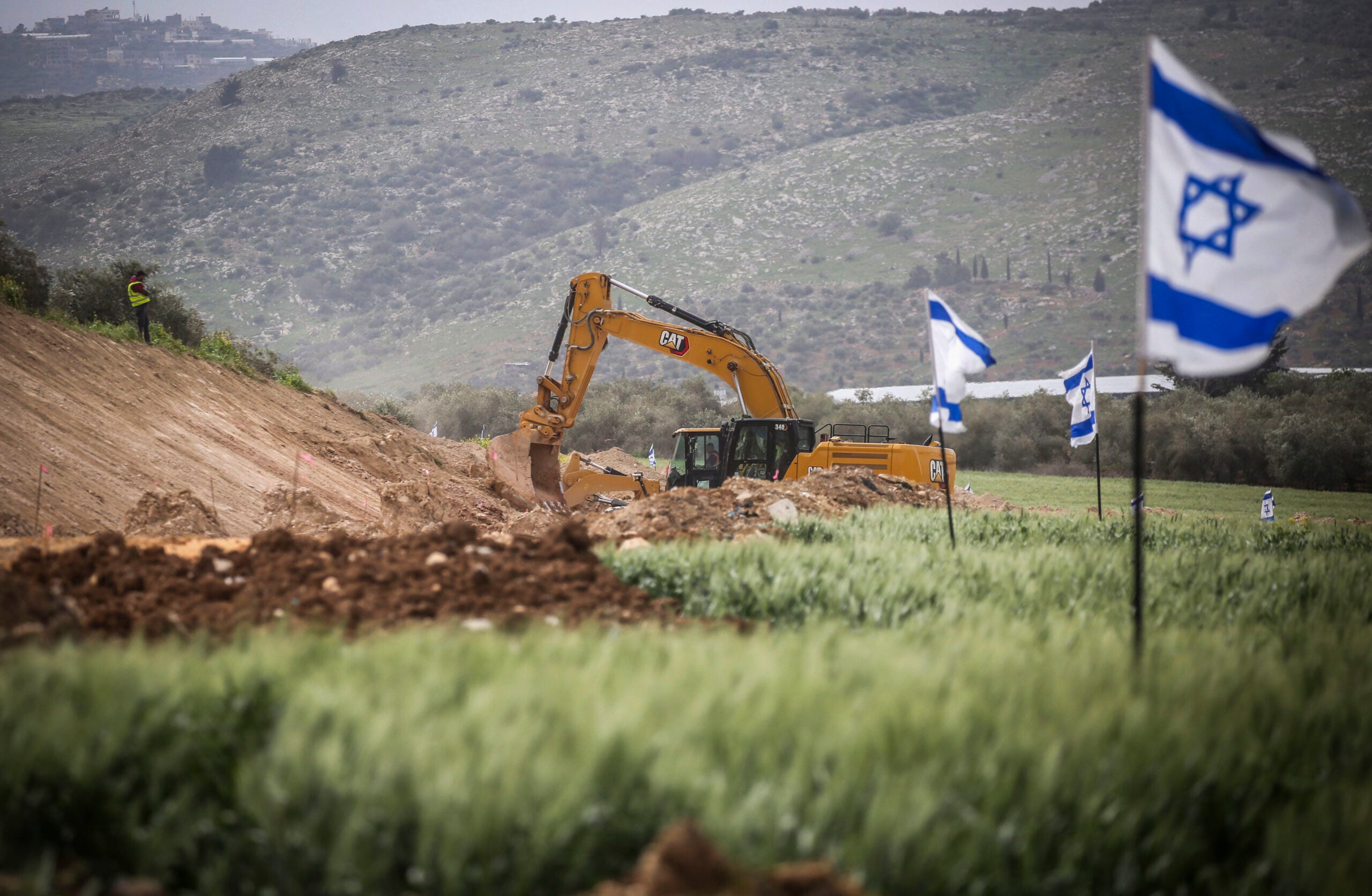
One of the peak moments in the return to northern Samaria was the ground-breaking ceremony for the community of Sa-Nur held about a month ago. At the ceremony, Finance Minister Smotrich said: “We are erasing the disgrace of the expulsion, killing the idea of a Palestinian state, and returning to the community of Sa-Nur. This is a day of celebration.” Defense Minister Israel Katz said: “The legalization of more than 140 farms in Judea and Samaria soon constitutes another step in strengthening Israeli presence and weakening Palestinian attempts to establish themselves in the area.”