


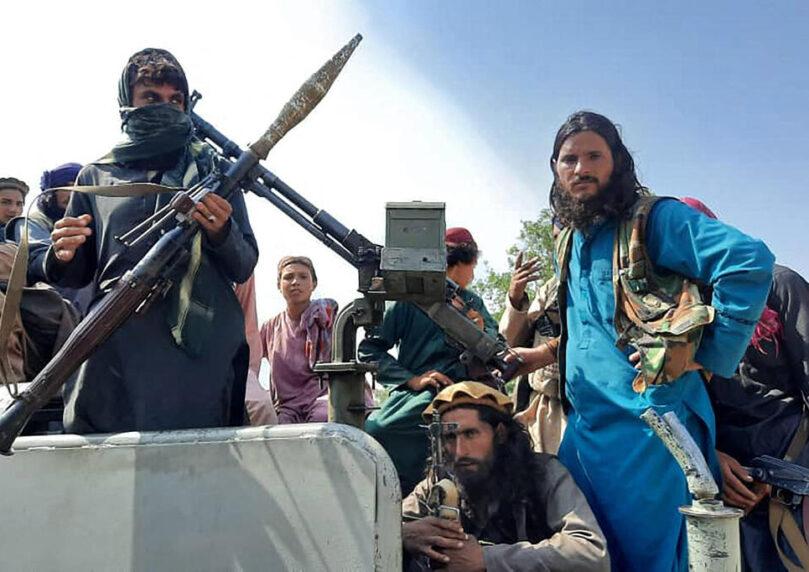

Russia continues to challenge the West, formalizing ties with one of the world’s most extreme terrorist organizations, signing a military alliance with the Taliban terror group in Afghanistan on Wednesday. The dramatic move, whose full details remain under wraps, marks the completion of the Kremlin’s policy reversal—which began in 2021 when President Vladimir Putin hinted at removing the Taliban’s terrorist designation, and reached its peak last year when he defined them as “allies in the war on terror” and granted them full diplomatic recognition, the first of its kind in the world, Fox News reported today (Friday).
The historic meeting between Sergei Shoigu, secretary of Russia’s Security Council, and Afghan terrorist, the ‘commander’ Mohammad Yaqoob, represents a deep strategic interest for both sides. The Taliban’s so-called defense ministry rushed to celebrate the event and posted on X about Yaqoob’s trip to the security conference in Russia. During the meeting, the terrorist calling himself the Taliban defense minister emphasized the depth of the emerging relationship: “Afghanistan and Russia have long and historical relations. In this direction, we want to advance even further. We have expanded bilateral relations between the countries.”
Russia’s dramatic rapprochement with the Taliban began the moment the organization’s fighters entered the capital, Kabul, in August 2021, and ousted Afghan President Ashraf Ghani. Nikita Smagin, an expert on foreign policy and Islam at the Carnegie Endowment for International Peace, explains that Russia received “preferential treatment” from the first moment: the Russian embassy in Kabul received immediate security, and the Russian ambassador, Dmitry Zhirnov, was the first foreign diplomat to meet with the new power structure.
According to Smagin, Putin’s formal recognition of the Taliban is a powerful symbolic and political move that doesn’t stem from purely economic or commercial considerations: “Moscow needs to take steps that will restore its image as an influential power that holds the initiative, and recognition of the Taliban regime serves exactly that purpose. The status of being the first country to formalize official diplomatic relations guarantees Russia a leading role in discussions on regional security. It represents an attempt to prove that it is a leading global power that isn’t afraid to break existing norms and set precedents for other countries.”
Meanwhile, Shoigu used the international stage to attack the U.S. and its allies, calling on Western countries to immediately release Afghanistan’s frozen financial assets under the sanctions regime. “We are convinced that Western countries should unfreeze the blocked Afghan assets, fully acknowledge their responsibility for 20 years of presence in Afghanistan, and bear the burden of rebuilding the country after the conflict,” Shoigu declared.
The signing of the military cooperation agreement between Moscow and Kabul alongside the whitewashing of the Taliban’s status represents a worrying geopolitical turning point for the U.S. and the West. The immediate operational significance is granting Russian state and security cover to an extremist Islamist regime, a step that weakens the international community’s ability to pressure the Taliban on human rights issues, women’s oppression, and their active sponsorship and planning of terrorism.
For Vladimir Putin, this alliance is a vital tool for gaining power over Russia’s porous southern borders. Moscow is trying to save itself from the security threats from jihadist organizations rivaling the Taliban, such as ISIS’s Afghanistan branch, operating throughout Central Asia, and it sees the Taliban as the “local cop” who can stem the flow of terrorism toward neighboring countries under Russian influence. Moscow’s embrace of the son of Mullah Omar proves that in the framework of the global struggle against the West, the Kremlin is willing to legitimize even those who were once considered humanity’s bitterest enemies.