


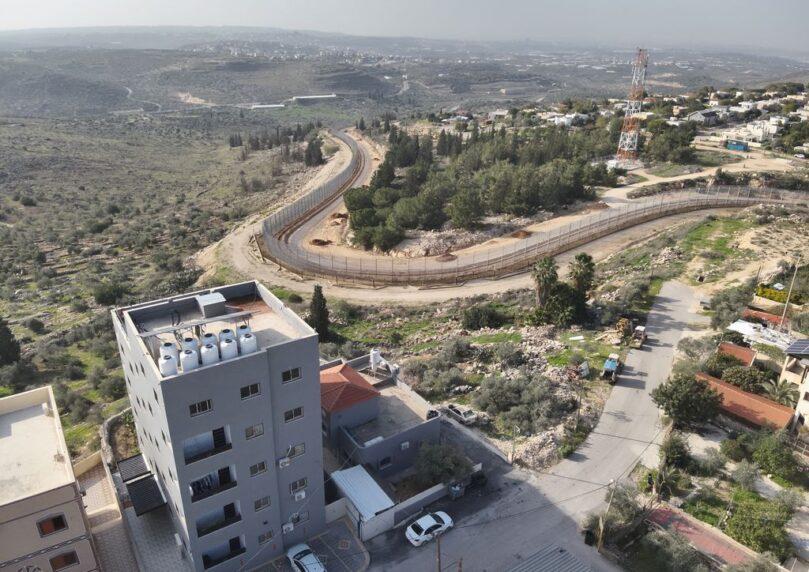

The Shomron Regional Council and Regavim petitioned the High Court of Justice on Wednesday demanding the immediate demolition of an illegal five-story Arab building standing adjacent to homes in Sal’it. The petition was filed after Regavim sent an urgent letter to government ministers highlighting the severe security threat posed by the structure.
The building, erected by Arabs from the area, sits just 75 meters from Sal’it’s security fence and 250 meters from residential homes. It also stands near a critical electrical facility, heightening concerns it could be exploited for hostile purposes.
According to data and aerial photographs Regavim attached to the petition, construction and development of the building began in 2022 and was only recently completed. In recent months, a new playground was even built next to the structure, indicating plans for permanent habitation. Throughout the construction period, council and Regavim inspectors repeatedly reported the activity to enforcement authorities, but no action was taken on the ground to halt the building.
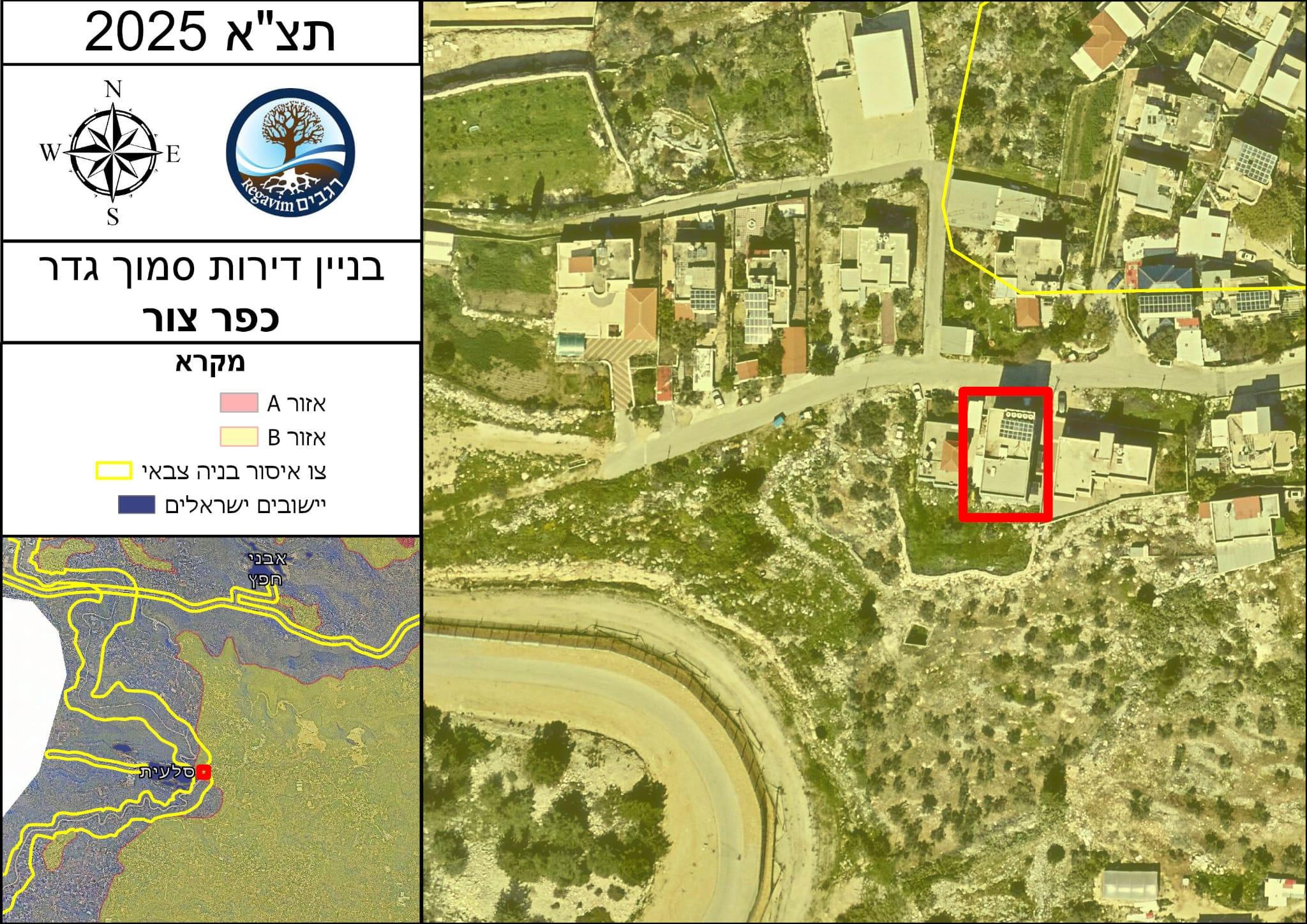
Regavim emphasizes that although the building itself was constructed in Area B, security responsibility for the zone falls on Israeli forces and the security establishment. Due to the grave risk to the community, a military construction ban was originally imposed on the site, but the order was never enforced. The structure completely violates a security axis and directly overlooks homes in Sal’it, posing a tangible danger to Israeli forces and area residents.
Yossi Dagan, head of the Shomron Regional Council, addressed the petition: “We are acting responsibly and out of genuine concern for residents’ security. The reality where such a tall building stands near a community, overlooking family homes and a security axis, demands swift and clear action. After October 7, there’s no room for tolerance and a soft hand. Even though the building is in Area B, there’s no logic in tolerating and turning a blind eye to this illegal construction that endangers residents.”
Dagan added that “we trust the security establishment will thoroughly examine the risk and act according to its responsibility to remove the structure and protect the area’s security. After October 7, we all understand how critical it is not to leave such weak points in the field.” His words reflect frustration with the lack of enforcement and the demand for decisive action.
Roi Drucker, Regavim’s director for Judea and Samaria, reinforced the message: “Anyone with sense understands that illegal construction adjacent to communities and roads creates infrastructure for terror, and the danger to life is only a question of time. Alongside the welcome trend reversal and significant increase in enforcement in Area C in Judea and Samaria, the system cannot abandon citizens’ security and hide behind claims of lack of authority because the area is classified as B. The security establishment has responsibility, full authority, and more than anything—an obligation to protect security and not allow the enemy to exploit the vacuum.”