




The State of Israel is in the midst of a massive campaign in the north, with signs on the ground indicating advanced preparations for a significant escalation in the coming days. In Lebanon, reports are increasing that residents have begun evacuating the Dahiyya neighborhood of Beirut as part of preparations for the expansion of the fighting. On the Israeli side, last night was characterized by intense IDF activity in the sector. Residents and reporters in the area reported the echoes of particularly loud explosions that shook buildings along the confrontation line.
Following the security situation, the daily routine of life in the north was severely affected, and the most significant effect was the collapse of the education system. During the evening and night, a domino effect occurred, with one local council after another announcing a change in guidelines, until the morning opened with almost no school routine.
The education system was shut down in most areas, with the exception of special education settings and kindergartens operating within standard protected areas. The systemic damage is also evident in the tourism and leisure industry, with the closure of many sites of the Nature and Parks Authority and a widespread wave of cancellations at hotels in the area.
Along with the exchange of fire, the threat that most disturbs and frightens residents and security forces in the towns along the confrontation line is the increasing use of explosive drones. Only this morning, another explosive drone has exploded inside the sovereign territory of the State of Israel, near the border. Military sources clarify that this is a different type of threat compared to rockets, missiles, or large drones: unlike linear weapons that are launched on a predetermined trajectory towards a target, explosive drones are able to maneuver dynamically, follow people, move quickly, and penetrate directly into buildings and protected areas.
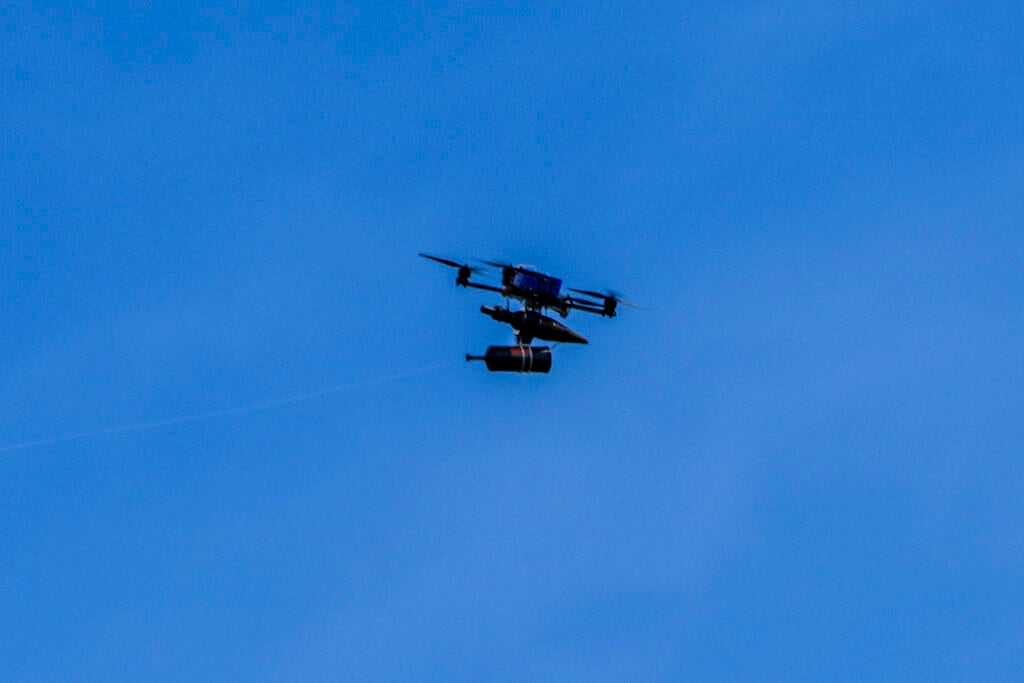
The lethality of this weapon has already been proven in the field; a person who was hit in the head by an explosive drone in the Rosh Hanikra area is still hospitalized in critical condition at the Galilee Hospital in Nahariya. The documentation coming from the field, such as the recent incident in Shomra, illustrates the lack of permanent solutions: soldiers in the field are forced to conduct prolonged small arms fire at the drones in an attempt to bring them down, or rely on temporary measures such as iron nets in which the drones sometimes get stuck and prevent them from exploding.
Given the severity of the threat and the understanding that the existing measures on the ground are only temporary, the issue reached the defense establishment and the political echelon. The chairman of the Foreign Affairs and Defense Committee, Boaz Wismut, is currently promoting accelerated steps to examine immediate technological and operational solutions, which are expected to be discussed and possibly even implemented as early as next week.
Among the main solutions currently being examined by the committee and the defense establishment:
Interception using light pulses: dedicated systems capable of neutralizing the drone from the air.
Laser systems: advanced technological developments for destroying small, fast aircraft.
Electronic warfare and wiring jamming: systems capable of disrupting the satellite and GPS frequencies of the drones, thereby cutting off control of them and preventing them from reaching their destination – an action that current defense systems have difficulty performing effectively against this type of equipment.

The Northern Command, headed by Major General Rafi Milo, is conducting ongoing situation assessments and updating local authorities into the night. Although the area has not been officially defined as completely “red,” During the night, the strict guidelines and situation assessments of the council heads reflect full readiness for broad escalation scenarios in the coming weeks, with the hope that technological solutions from two realities will be put into use as soon as possible.