


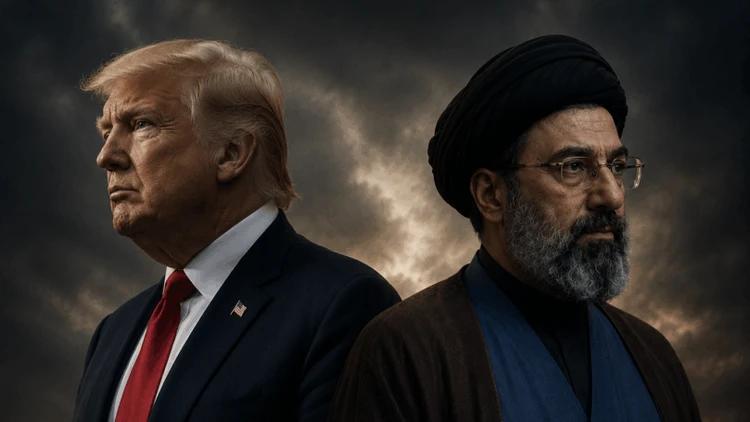

US Secretary of State Marco Rubio and a senior Iranian official issued parallel, opposite statements on Sunday regarding the details of the new diplomatic agreement signed in the Gulf. While the US administration began preparing for an official presidential statement by US President Donald Trump based on significant progress in the talks, the Iranian leadership simultaneously issued a sweeping denial via Reuters and drew a hard red line regarding its refusal to give up its enriched uranium reserves.
Secretary Rubio confirmed that diplomatic talks had reached practical stages. Rubio chose not to elaborate on the technical details, but openly signaled that the decision was in the hands of the president: “I believe there will be news throughout the day on Iran. There is progress. I’ll leave that to the president.”
Immediately after that, Rubio detailed the security thresholds of the Washington administration and sent a strong message regarding the maritime freedom of movement of the powers in the region: “The main issue is that Iran should not have nuclear weapons, and the Strait of Hormuz is directly related to that. This is an international shipping area, and it is simply not under the control of the Iranians.”

In complete parallel with the White House’s attempts to create a narrative of diplomatic achievement, the leadership in Tehran issued a strong statement intended to deal a blow to the US Secretary of State’s words. A senior Iranian official categorically rejected the Western claims and placed a tough line of fortifications around his country’s energy and nuclear projects.
In a conversation with Reuters, the official said, “We completely deny these reports. Tehran will not agree to hand over its enriched uranium to an external party under any circumstances. The nuclear issue as a whole is not part of the preliminary agreement that is currently being discussed.”
These simultaneous statements reveal a deep gap between the jubilant declarations in Washington and the official positions inside the negotiating rooms, and show that Iran firmly refuses to link the local arrangements in the Gulf with giving up its strategic nuclear assets.
The main implication is the Iranian attempt to thwart in advance President Donald Trump’s planned victory celebration. When Rubio announced that “there will be news throughout the day,” he tried to create a presentation of Iranian surrender. The Iranian senior official’s parallel run to Reuters was intended to make it clear to the international system that Iran is not coming from a position of inferiority, and that if the United States insists on making the preliminary agreement conditional on the delivery of enriched uranium, the talks will all collapse before President Trump has time to deliver his speech.
Tehran also insists on preserving its nuclear sovereignty. Iran is effectively signaling that it is ready to discuss political and economic agreements in the Gulf – around freedom of navigation and the Strait of Hormuz, but it is setting an absolute red line that the nuclear program and enriched uranium are not negotiable. So the conditions that the US demands are not met in this situation, where Iran insists on keeping the nuclear and uranium.
Earlier today, the pro-Qatari newspaper “Al-Arabi Al-Jadeed” published the details of the memorandum of understanding exchanged between the US and Iranian negotiating teams through the mediators in Pakistan. The documents reveal the report: The five confidential points of the emerging deal with Iran have been revealed The take-off, which was partially approved by President Donald Trump, who announced last night that significant progress in the talks, in the face of the absolute insistence of the Iranian news agency “Fars” that Tehran has not given up its strategic bargaining chips, including full control of the global oil shipping lanes and the nuclear program.
According to the official source in the Pakistani Foreign Ministry, the five core points of the latest compromise proposal include extensive security and economic clauses. First, it was determined that the current ceasefire window will be extended by an additional 60 days, a move defined as part of temporary and necessary arrangements until a final agreement is signed. Second, an agreement was reached to open the Strait of Hormuz and lift the naval blockade of Iranian ports, under which American and Iranian forces will remain in their current positions but will allow free passage of commercial ships.
In the economic sector, Pakistan proposed to lift restrictions on Iranian funds frozen in Western banks. The source noted that impressive progress has been made on this front, but a final agreement has not yet been reached on the release mechanism. In addition, the proposal includes the inclusion of Lebanon in the agreement, which confirms Senior Iran Analyst Dror Balazada’s publication, a decision that will lead to the implementation of a ceasefire in Lebanon and an end to the war with Israel, with Washington and Tehran providing joint support for conducting direct political dialogue between the Lebanese government and the Israeli government.
The nuclear clause remains the most sensitive issue. The Pakistani outline states that talks on Iran’s nuclear program with the United States will resume exactly where they left off, but these discussions will be postponed in a group and will only be discussed in the second phase of the dialogue, as already agreed between the parties.
President Donald Trump expressed great optimism about the outline, and in a post he published on Truth Social, he officially wrote: “Negotiations on an agreement are progressing significantly, until the agreement between the United States and the Islamic Republic of Iran, and several other countries, is finalized. In addition to several other elements of the agreement, the Strait of Hormuz will be opened.”