



Nearly three years after Hamas’s deadly surprise attack on southern Israel, a comprehensive exposé published today (Thursday) by The Wall Street Journal, based on current and former senior security officials, reveals the operations of the special elimination task force “Nili,” as the covert manhunt continues at full intensity inside the Gaza Strip and beyond to eliminate every perpetrator of the massacre.
The task force holds a list of thousands of names—from Hamas’s most senior leadership down to the last terrorist and looter, including those who merely drove a tractor that breached the border fence during the October 7 massacre. Through a powerful combination of facial recognition software, analysis of social media videos and terrorists’ body cameras, tracking cellular antenna location data, and interrogations of detainees, intelligence agents are marking and eliminating targets one by one.
The creation of Task Force Nili was born from the resounding intelligence failure to prevent the October 7 attack, and it largely echoes the Mossad’s “Wrath of God” operation to eliminate the ‘Palestinian’ terrorists responsible for murdering 11 Israeli athletes at the 1972 Munich Olympics. The rules set for creating the targeted kill list are strict and clear: security forces mark a person for death without trial if at least two solid pieces of evidence are found proving he actively participated in crimes on that terrible day.
Shin Bet and Military Intelligence personnel systematically scan hundreds of hours of videos that the terrorists themselves filmed on phones and GoPro cameras to brag on social networks, cross-reference data with intercepted phone calls, and operate advanced facial recognition software. The unit’s operational achievements include locating and eliminating from the air the two terrorists who held Noa Argamani’s boyfriend in the famous kidnapping video on the motorcycle, as well as eliminating the tractor driver who breached the main border fence two years after the event, while he was walking on a narrow urban street in Gaza.
The manhunt doesn’t stop at the Strip’s borders and has struck hard at Hamas’s top leadership in the Middle East. Already in January 2024, Saleh al-Arouri, deputy head of the political bureau, was eliminated in Beirut by precision missiles that hit his office after he ignored Hezbollah warnings and used cellular devices and computers connected to the internet. Six months later, Hamas chief Ismail Haniyeh was eliminated by an explosive device planted in his room at an official Iranian Revolutionary Guard guesthouse in the heart of Tehran.
Mossad chief David Barnea defined the spirit of the operation at Zvi Zamir’s funeral: “It will take time, just as it took time after Munich, but our hands will reach them, wherever they are.”
Last Friday, the task force recorded another dramatic success with the elimination of Izz al-Din al-Haddad, commander of the Gaza Brigade since 2025 and one of the last surviving members of the original military leadership. Three Israeli fighter jets dropped 13 bombs on a hideout apartment and escape vehicle in Gaza City, eliminating Haddad, who had been working to restore the organization’s military capabilities and took direct part in holding Israeli hostages in tunnels.
According to intelligence sources, the fatal mistake of Izz al-Din al-Haddad, who served as commander of Hamas’s Gaza Brigade, was his attempt to actively exploit the ceasefire days to rebuild the organization’s military capabilities in the northern Strip, confident that the political agreements would grant him immunity from attack.
Haddad, who was deeply involved in planning the October 7 massacre and holding Israeli hostages in the tunnel network, began emerging from underground hideouts and conducting meetings with field operatives. The special task force “Nili” of the Shin Bet and Military Intelligence, which had been meticulously tracking the movements of his family members and associates to locate a thread, precisely identified the moment he moved between a hideout apartment in Gaza City and an escape vehicle trying to leave the area.
The technological intelligence was translated within seconds into a fire order, and three Air Force fighter jets scrambled into the air dropped 13 heavy, precision bombs on the building and vehicle, eliminating al-Haddad and his men before they could disappear underground again. The IDF Chief of Staff emphasized after confirming the elimination: “The IDF will continue to pursue our enemies, strike them, and settle accounts with everyone who took part in the October 7 massacre.”
Captivity survivor Emily Damari, who was kidnapped from her home and held for nearly 500 days in the underground tunnel system under Haddad’s command, shared on social media her immense sense of relief: “He planned October 7, murdered my friends and many other dear people, planned my kidnapping and held me in Hamas tunnels. This is a very, very, very important closing of the circle for many people.”
At this stage, Hamas is repeatedly violating the ceasefire, with shooting and threats against our forces in the Yellow Line compound. Israel is exploiting every ceasefire violation or approach of terrorists to defense lines to pull names from the Nili list and carry out targeted eliminations using drones and fighter jets, such as the elimination of Ali Sami Mohammed Shaqra—a company commander who was involved in kidnapping Hersh Goldberg-Polin, and Mohammed Issam Hassan al-Habil, who was responsible for murdering kidnapped soldier Noa Marciano.
*Israel’s prolonged manhunt has three central strategic meanings:*
– *”Healing for the soul” and justice for survivors:* The security establishment has defined eliminating the perpetrators as a supreme moral goal aimed at providing comfort and closure to the families of the murdered and kidnapped. The knowledge that the people who caused the personal suffering of helpless civilians are not immune and are being eliminated one by one constitutes part of the national and personal rehabilitation process of Israeli society.
– *Establishing the language of deterrence in the Middle East:* As experts on ‘Palestinian’ affairs note, in the geopolitical space of the Middle East, the concept of “revenge” carries significant strategic weight. It serves as a metric for determining the degree of seriousness and determination of the state in the eyes of its enemies in near and far circles—like Iran and Hezbollah. The message conveyed is unequivocal: whoever harms Israelis will be pursued until their last day, regardless of their geographic location or the time that has passed since the crime.
– *The debate over future motivation:* Security officials believe the targeted eliminations create effective deterrence and prevent young ‘Palestinians’ from joining terror organizations out of fear for their lives.
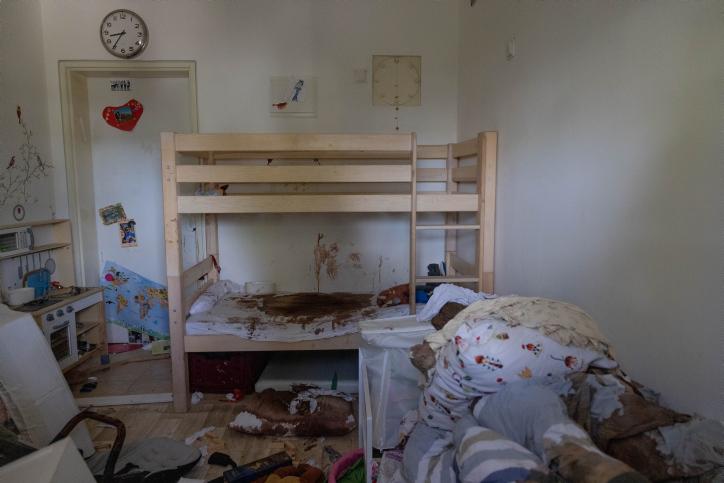
The murderous attack of October 7 left a bleeding wound and severe damage to Israeli deterrence, when nearly 3,000 terrorists and Gazan civilians crossed the border, murdered 1,200 people, and kidnapped about 250 Israelis and foreigners to the Strip. The deep intelligence embarrassment pushed the heads of the Shin Bet and Military Intelligence to immediately establish Task Force Nili with the start of fighting, with the goal of creating a systematic kill list that would leave no criminal unpunished.
Throughout the long months of fighting, the IDF struck hard at Hamas battalions and destroyed extensive parts of the tunnel infrastructure, which ultimately led to an official ceasefire agreement brokered by the United States and the release of the remaining living hostages. However, despite the official large-scale fighting stopping, Hamas refused to disarm as required by the agreements and began trying to restore its civilian and military grip on the Strip.