


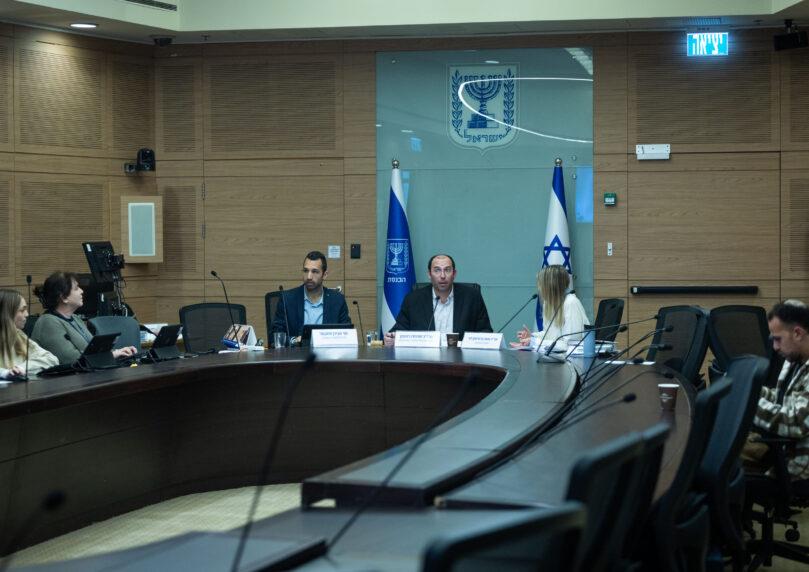

The Knesset Constitution Committee continued today (Sunday) to prepare for a first reading of the bill to split the attorney general’s position, one of the coalition’s flagship judicial reform initiatives. The move comes as part of a broad legislative blitz the coalition is pushing in recent days, attempting to calm the crisis with ultra-Orthodox parties and prevent them from supporting dissolving the Knesset over the military draft law crisis.
Constitution Committee Chairman Simcha Rotman announced that after 37 committee sessions, the updated draft “reflects the deliberative decisions” and that he intends to bring the proposal to a vote this week.
Under the proposal, the attorney general’s powers would be split into two positions: an attorney general who would be responsible for legal counsel and representing the state in non-criminal matters, alongside a solicitor general who would have sole responsibility for criminal matters and prosecutions. Additionally, the government would be able to determine in certain cases that the attorney general’s opinion is not binding and does not reflect the law.
The proposal further stipulates that the attorney general would be appointed by the government based on recommendations from the prime minister and justice minister, and the term would be tied to the appointing government’s tenure. In contrast, the solicitor general would be appointed for a six-year term from a list of candidates compiled by a professional committee and would be independent in criminal decisions. The law also includes new mechanisms for opening investigations and filing indictments against senior officials, which would require approval from a district court and a special senior officials committee.
The committee debate turned into a sharp confrontation between the coalition and the opposition. MK Gilad Kariv criticized Rotman and claimed this was a “revenge campaign” and “rushed legislation,” while MK Yoav Segalovitz accused the coalition of “absolute abuse of Knesset work.” During the debate, Rotman ordered Segalovitz removed from the hall after a loud confrontation, and opposition members subsequently walked out of the session.
Professional sources and legal advisers also criticized the proposal. Representatives from the Justice Ministry, the Public Defender’s Office, and the Israel Democracy Institute warned of damage to the attorney general’s independence, politicization of the position, and undermining of checks and balances against the government. In response, Rotman argued that the law’s purpose is “to clearly regulate the division of powers” and that the current situation creates an unusual concentration of power in the attorney general’s hands.
The coalition hopes that advancing a series of bills, including the attorney general split bill, will help stabilize the ranks with the ultra-Orthodox partners and for now, distance the threat of dissolving the Knesset.