


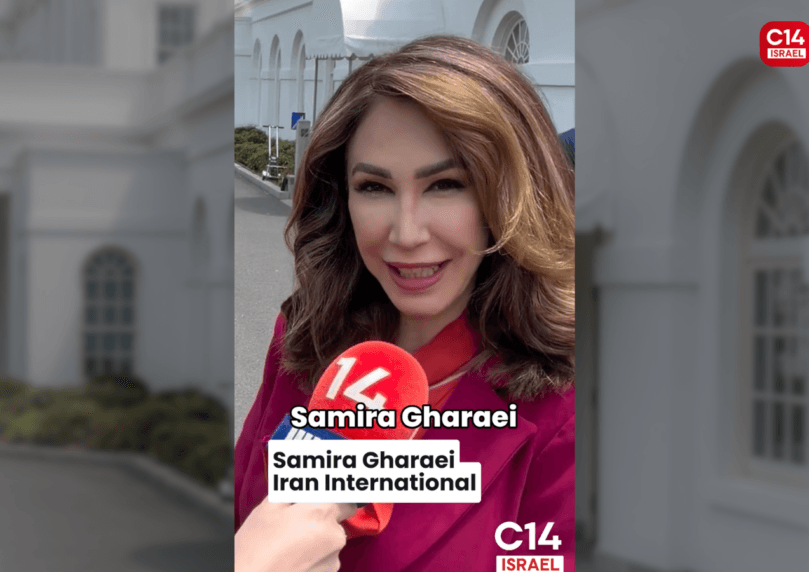

Watch this interview on C14 English
Iranians are economically gutted, politically deflated, and watching the Trump administration with a mix of fading hope and quiet resentment. That is the picture emerging from inside the country, where the regime’s internet blackout has cut citizens off from the global economy and from each other.
Veteran Iranian journalist Samira Gharaei tells Channel 14’s Libby Alon, “First of all, they really suffer from the internet shutdown. It’s really affecting their lives. And because of that, because there is no internet, it’s very difficult to hear from them. And information coming out of Iran is like pure gold.” Gharaei emphasizes how bad the internet shutdown has been for Iranian small business owners.
“Many lost their jobs, many were working, you know, like they had small businesses and they were using internet. So they have no revenue now. So this is going to be very, very challenging for them. Maybe not today, but in let’s say three months, four months is going to be very difficult. And I don’t know that pressure. it going to lead to like a social uprising because of that? We don’t know yet.”
The bottom line is that people – regular Iranians – are not doing well. Their disappointment is widespread, and traces back to Washington – and now, Beijing. Trump’s visit to China this week has sharpened the Iranian people’s sense of abandonment. The image of an American president negotiating with Tehran’s chief backer, while ordinary Iranians sit in the dark without internet or income, has landed badly inside the country. Gharaei says, “China is not a great friend of Iranian people. They are the greatest friend of Islamic Republic, not the people. And now President Trump is there, gonna talk about Iran, and people think that…President Trump is selling them.”
A residual flicker of trust remains, grounded in Trump’s record, like the strike on Soleimani and the exit from the JCPOA. Iranians hold onto the possibility that Trump will follow through this time as well. Patience, though, is thinning, and the mood is captured in a sentiment now circulating on Iranian social media, “Okay, we know you are going to do it eventually, but you are driving us crazy.”
Gharaei tells Alon, Iranians love Israel. They were upset to see Israel come under attack. And the hope rarely voiced openly inside either country was voiced today, on camera, at the White House: commercial flights between Tel Aviv and Tehran, instead of missiles. That’s the hope of one Iranian journalist, speaking for her people, who have been silenced.