


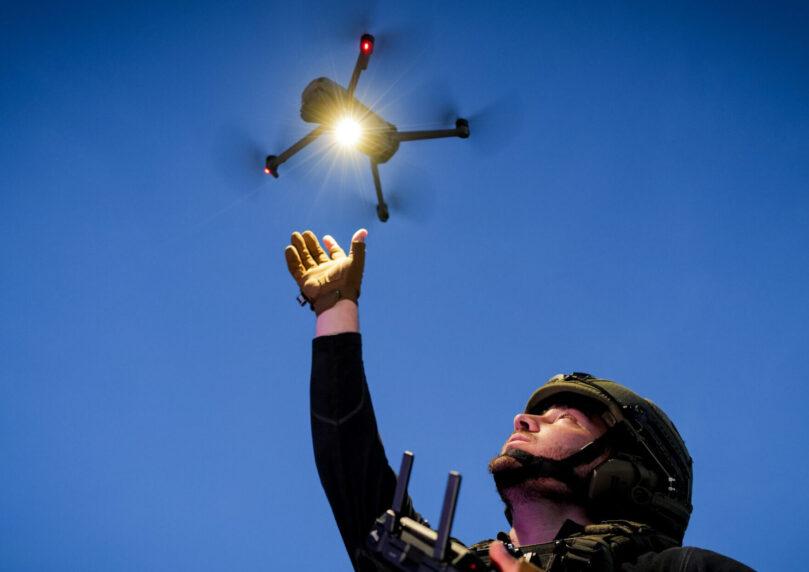

Prime Minister Benjamin Netanyahu held an emergency meeting in response to the escalating use of explosive drones and casualties among Israeli forces on the northern border. At the meeting’s conclusion, the government approved funding of 2 billion shekels (~$690 million) for procurement and development of advanced technological solutions. The central goal is to create a protective shield for soldiers that will counter the drone threat that has transformed the battlefield over the past month. The initiative is being implemented immediately alongside an order for 5 million bullets.
The technological solutions are designed to address two main vulnerabilities identified in the field. Beyond deploying stationary radars along the border to protect communities, the IDF will integrate two systems designed to directly protect forces.
Active protection for mobile forces: A system adapted to intercept drones and explosive UAVs, providing an active defense layer that will detect and destroy the threat before it hits the vehicle.
Mobile radars for infantry: Soldiers in the field will be equipped with small, advanced mobile radars that will operate during combat operations. These systems will alert soldiers to approaching danger in real time, allowing them to take defensive action or quickly find cover.

The need for an urgent technological solution became critical after an especially difficult month in the northern sector. During this period, the terror organization Hezbollah launched more than 100 explosive drones at outposts, troop concentrations, and civilian communities. Unlike regular trajectory fire, the drones are characterized by high maneuverability and a low signature, making them difficult for existing detection systems to identify.
These attacks weren’t limited to property damage: over the past month, Israeli forces suffered casualties when soldiers were killed by direct hits from explosive drones. These severe incidents highlighted the lack of existing solutions against Hezbollah’s “silent weapon” and led to the operational demand for a solution that would protect soldiers’ lives on the contact line.
The allocation of 2 billion shekels marks the understanding at the political and military levels that the drone threat requires a dedicated technological response that doesn’t rely solely on Iron Dome. The deployment of mobile radars and active protection systems is an attempt to restore soldiers’ confidence in open terrain and neutralize Hezbollah’s element of surprise.