


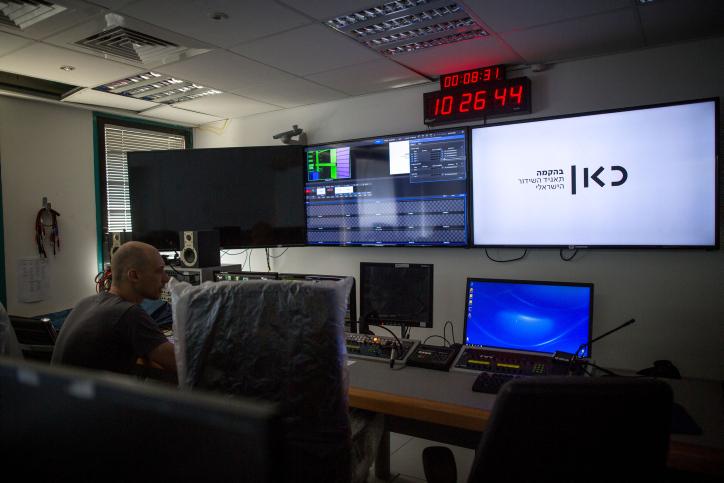

Amit Segal recently opened his show with words viewers didn’t hear from him for a long time: “I came out looking like a sucker.” He mocked what he called “the most balanced broadcast on Kan Reshet Bet”—a hit job on Bezalel Smotrich that wasn’t an anomaly but a pattern. “The channel’s investigative program focuses again and again and again on attacks against the right,” he said, concluding: “There’s no reason why in the 21st century the Israeli taxpayer should fund with nearly a billion shekels a year someone who spits in his face… When the Israeli Public Broadcasting Corporation was established, I was really for it, I fought for it to be created. I think I was wrong.”


 2+
2+Segal’s frustration is understandable. But the assumption embedded in his words—that the biased agenda can be “fixed” if only the right people are replaced or the right public criticism is applied—misses the problem. The bias isn’t a malfunction in the mechanism; it’s its predictable output. And to understand why, you need to go back a decade, to a fee that was supposedly abolished.
In 2015, Israel’s television license fee was abolished. That’s what politicians announced, and that’s what the headlines said. Anyone who believed that’s what actually happened should check their vehicle registration fee. Buried in that fee to this day is an amount transferred to the Israeli Public Broadcasting Corporation—a remnant of the radio license fee that wasn’t abolished but hidden. Most of Kan’s budget, about 650 million shekels, comes from there.
This story isn’t about public broadcasting. It’s about a fundamental characteristic of government spending: it’s born easily, dies with difficulty, and usually doesn’t die at all—it just changes address.
 2+
2+When a commercial company asks you for money, it must first convince you that you’re getting something in return. If the product isn’t good enough, you go to a competitor, or you don’t buy anything at all. When the state asks you for money for public broadcasting, the question of whether you watch, listen, or even live in the world of radio is irrelevant. The television license fee was imposed on anyone who owned a receiver “capable of receiving broadcasts,” even if their receiver was a computer on which they never once watched Channel Eleven. The radio fee in vehicles is paid today by people who only listen to podcasts, by people who have three cars at home, and by people who have never turned on the car radio. The connection between who pays and who receives service isn’t weak—it doesn’t exist.
That’s why this model survives: those who make a living from customers please customers; those who make a living from a forced fee please those who approve budgets. Different customers, different results.
This is also why Segal’s complaint sounds familiar to anyone who knows the arrangement. He’s not complaining about a new phenomenon but about the predictable output of the structure itself: when the consumer isn’t a customer but a forced revenue source, there’s no reason to please him. You need to please whoever controls the tap. And the tap of public broadcasting, even if well hidden inside the vehicle registration fee, is operated in the Knesset—not in the living room.
 2+
2+We know little about the cost of this model, because those who collect aren’t rushing to present the data. But in 2014, it emerged in the Knesset Finance Committee that the year before, the Broadcasting Authority paid about 30 million shekels—to lawyers who handled collection cases for it. Thirty million shekels paid not for production, not for content, and not for employees, but for chasing after citizens who didn’t want to pay for a product they didn’t want to consume. In any normal business, a check like that to lawyers is called “a sign that something in the business model isn’t working.” In public broadcasting it’s called “collection budget.”
The classic defense of the fee is that “public broadcasting doesn’t have to be profitable.” That’s a correct claim, but it dodges the question. The question isn’t whether it has to be profitable. The question is who pays, and with what choice. David Ben-Gurion, who was more honest than his successors on this issue, saw radio as “a powerful propaganda tool for strengthening the government.” That is indeed a justification—but it’s not the justification used today, because in a democratic public it’s hard to sell. So they talk about “culture,” “heritage,” and “education,” and meanwhile they collect.
When it was finally proposed to abolish direct collection, the result wasn’t that the state stopped taking the money, but that it moved the pipe. Instead of the television receiver—the vehicle. Instead of an envelope in the mailbox—one line within the registration fee. Anyone who looks at their pay stub once a year and locates the vehicle registration fee line knows: the amount went down, but not to zero. The amount was abolished, but didn’t disappear. This isn’t an anecdote, it’s a pattern. Programs are canceled, fees are canceled, taxes are canceled—and almost always they’re reborn under another name, sometimes in another pocket, but from the same taxpaying pocket.
The lesson here isn’t about public broadcasting. It’s about how we think about “Cancellation.” The consumer cancels a subscription when he stops paying. The government “cancels” a fee when it moves it to a place where fewer people look. These are two different actions, and confusing them is exactly what enables the survival of the radio fee—thirteen years after it was supposedly abolished.
Tamir Dortal is a lawyer, content entrepreneur, teacher, social activist and lecturer best known as the founder of the treatise “On Meaning,” which deals with political philosophy, conservatism, economics, Jewish identity and current affairs