


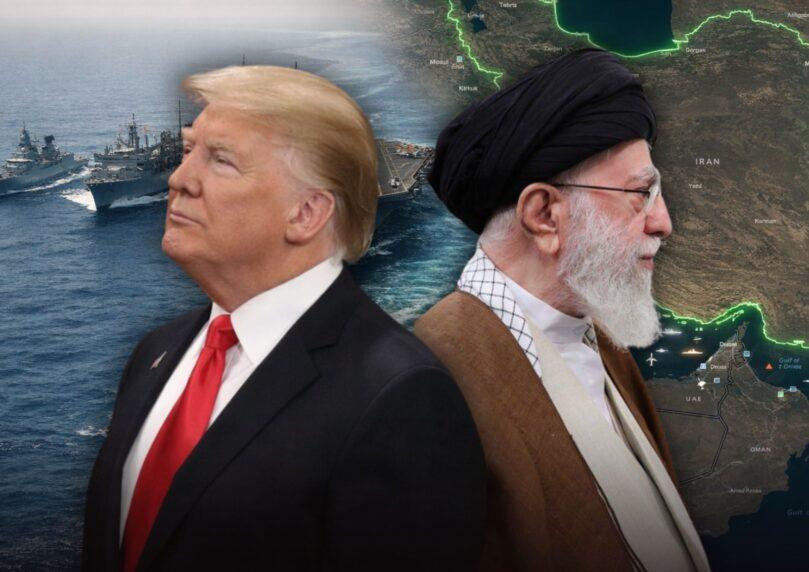

The Middle East shook yesterday following direct and intense fire exchanges between U.S. military forces and Iran’s military in the Strait of Hormuz. The military blow, which marked the most serious incident since a ceasefire was declared about a month ago, occurred while Washington awaits an official response from Tehran to a comprehensive peace proposal.
Despite reports of airstrikes on Iranian territory and the destruction of vessels, President Donald Trump insisted the ceasefire remains in effect, mixing contempt for Iran’s operational capabilities with unprecedented threats about the country’s future if negotiations fail.
The events began when three U.S. destroyers attempted to pass through the Strait of Hormuz as part of the American effort to break Iran’s naval blockade. According to U.S. Central Command, Iranian forces attacked the ships using missiles, drones, and fast boats. The American destroyers returned deadly fire and destroyed the sources of the attacks.
President Trump posted about the incident and sent a warning to Iran’s regime: “Three world-class American destroyers just successfully crossed the Strait of Hormuz, under fire. They sustained no damage, but great damage was done to the Iranian attackers. They were completely destroyed along with many small boats. The missiles fired at us were easily shot down, and the drones came and burned while still in the air. They fell beautifully into the ocean, just like a butterfly falling to its grave!”
Trump added that Iran “messed with us” and that the American response was “just a touch of love”—an expression meant to illustrate that the U.S. used only a small fraction of its power. “A normal country would have allowed these destroyers to pass, but Iran is run by lunatics,” the president added.
On the other side, Tehran presented a picture of violated sovereignty. Iran’s military command accused the U.S. of attacking an Iranian oil tanker and conducting aerial bombardments on civilian areas on Qeshm Island and in the cities of Bandar Khamir and Sirik. An Iranian military spokesman declared: “The U.S. and its allies must know that Iran will respond forcefully and without hesitation to any act of aggression. Our attacks inflicted significant damage.”
Despite the combative statements, official Iranian media reported just hours later that “the situation has returned to normal” in cities along the coast. Meanwhile, despite recent events, Trump claims diplomatic negotiations continue and that Iran has already agreed in principle to the U.S.’s key condition: complete renunciation of nuclear capability. Trump revealed that the American proposal is a comprehensive and detailed document.
“They agreed they won’t have nuclear weapons. They’re going to hand over the ‘nuclear dust’ to us—meaning, dismantle everything and hand over all the materials—and many other things we want. There’s zero chance they’ll get a bomb, and they know it. I believe they want a deal even more than I do,” Trump said.
However, the president sent a deadly warning in case the signing is delayed: “If they don’t sign the deal quickly, we’ll hit them much harder and with much more violence. You won’t need to ask if there’s a ceasefire—you’ll just see one giant glow coming from Iran.”
Since February, fuel prices in the U.S. have jumped more than 40%, bringing the average price to over $4. Trump is under enormous public pressure to lower prices, which will only be possible with the opening of the Strait of Hormuz, through which one-fifth of the world’s oil and gas supply passes.
Trump revealed that Pakistan is serving as a key mediator and was the one that asked the U.S. to freeze “Project Freedom”—a large-scale military plan—to allow diplomatic contacts to mature. Meanwhile, the U.S. continues to enforce a tight naval blockade on Iran. Just this past Monday, six Iranian boats that tried to disrupt ship traffic were destroyed. Trump calls this blockade a “steel wall” and promises it won’t be removed until a deal is signed.
Thursday’s fire exchange was an Iranian attempt to signal to the U.S. that the naval blockade is not without cost, but the crushing American response and Trump’s threats make clear that Washington has no intention of backing down. The world now looks to Tehran: will they sign over the “nuclear dust” or will the Middle East see that “giant glow” the American president threatened.