


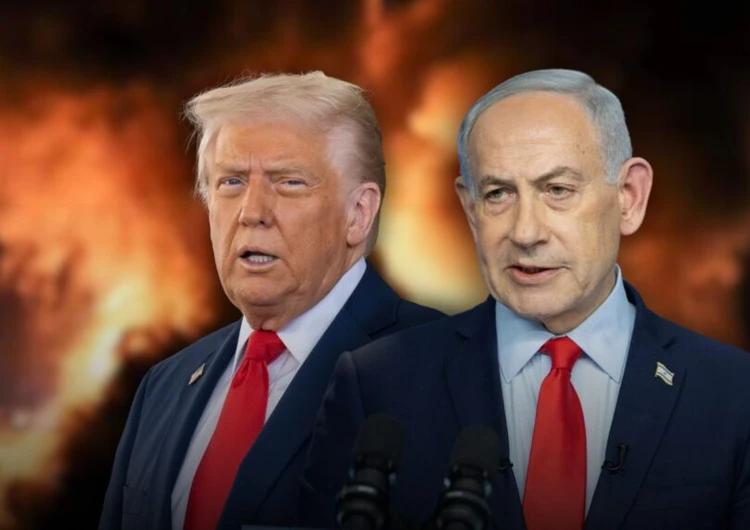

A senior Israeli official addressed reports Wednesday that Israel was surprised by how close the U.S. and Iran are to a deal. “The Americans didn’t surprise us,” the official wrote. “Prime Minister Netanyahu is in constant contact with President Trump, and they hold talks almost daily. There’s direct contact between the prime minister’s people and the president’s people.”
The official said the conversations made clear that Trump is standing firm on his red lines—chief among them removing nuclear material from Iran. “The prime minister has instructed the IDF to be prepared for any scenario, including a return to fighting if necessary,” the official added.
The Israeli response comes following statements by President Trump, who hinted at the possibility of ending Operation “Epic Fury” and lifting the naval blockade of the Strait of Hormuz, provided that Tehran complies with American conditions. In a post he published, Trump wrote that the passage through the Strait could be opened to everyone, but immediately afterwards he set another ultimatum: If the Iranians do not agree to an arrangement, the US will launch a round of bombing with unprecedented intensity. In a conversation with reporters, the president made it clear that it was still too early to celebrate the signing of the deal, and noted that he was heading to a series of meetings with his generals to examine further steps.
Later, Trump clarified in a conversation with PBS that the enriched uranium would be transferred to the US as part of the deal and that Iran would not use underground facilities. “If there is no deal, we will bomb them to hell,” said the American president.
At the center of the talks is a short “memorandum of understanding”, a one-page document that was formulated with Pakistani mediation, and is intended to form the official basis for a permanent ceasefire. The Pakistani mediators express great optimism and claim that the parties are very close to signing an agreement in principle. The emerging draft includes Clauses concerning the limitation of Iran’s enriched uranium, the release of frozen funds, and the establishment of a timetable for withdrawal from military operations. Sources involved in the talks note that Iran has declared that it has no intention of possessing nuclear weapons, a declaration that has received the blessing of the Washington administration.
Despite the optimism in Washington and Islamabad, reactions in Tehran are still mixed and cautious. While the Revolutionary Guards issued a solemn announcement that navigation in the Strait of Hormuz has become safe thanks to the “neutralization of threats from attackers,” the Iranian Foreign Ministry claims that they are still studying the proposal. Sources in Tehran emphasized that the latest text sent from the US includes a number of clauses that are unacceptable to them at this stage. Tensions on the ground are still very much felt, especially after a week in which missiles were fired at the United Arab Emirates and ships were hit in the maritime space.
In a confidence-building move, Trump announced overnight a temporary suspension of “Project Freedom,” the military operation to escort commercial ships through the Strait of Hormuz. The president noted that the decision was made following a Pakistani request, but made it clear that the naval blockade of Iranian ports would continue as a tool of pressure until a final agreement was reached. At the same time, Iranian Foreign Minister Abbas Araqchi landed in Beijing for a crucial round of meetings, in what appears to be an Iranian attempt to engage China in the process ahead of the planned summit between Trump and President Xi in mid-May.