


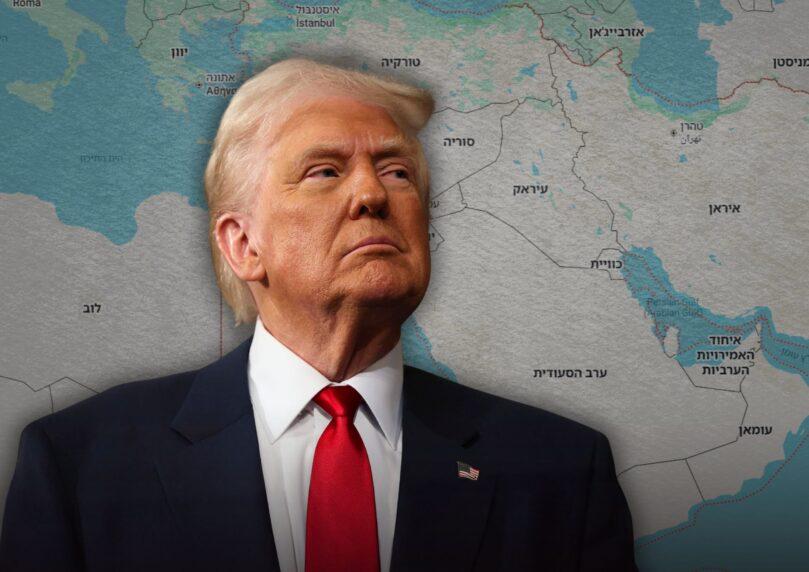

President Donald Trump announced a dramatic decision overnight to temporarily suspend Project Freedom, the U.S. military mission escorting commercial vessels through the Strait of Hormuz. Trump cited “major progress” toward a final agreement with Iranian officials, saying his administration wants to see if a deal can be finalized in the coming days.
The announcement comes at the peak of an especially tense week that included Iranian missile barrages against the United Arab Emirates and a strike on a cargo ship in the strait—putting the fragile ceasefire to its ultimate test.
In a post on Truth Social, Trump said the suspension came after formal requests from Pakistan and other countries. Alongside the optimistic tone about negotiations, the president stressed that the U.S. naval blockade of Iranian ports will continue at full strength to maintain pressure on Tehran.
His remarks came as Iranian Foreign Minister Abbas Araghchi arrived in Beijing for meetings with his Chinese counterpart Wang Yi, just days before Trump’s planned summit with Xi Jinping in China in mid-May.
Meanwhile, the reality on the ground remains violent and dangerous. The UAE reported intercepting fresh attacks from Iran just hours after a Pentagon briefing claimed Iranian actions didn’t amount to a resumption of war. The barrage included 12 ballistic missiles, three cruise missiles, and four drones.
Following the escalation, Prime Minister Benjamin Netanyahu held a rare phone call with UAE President Mohammed bin Zayed to express solidarity and coordinate joint defense measures. Israel’s security cooperation with the Emirates reached new heights with the revelation that Israel sent an Iron Dome battery to the UAE—the first time the system has been deployed to defend a foreign country.
Dozens of IDF soldiers are now on Emirati soil operating the system against evolving threats. At the same time, the Strait of Hormuz itself became a flashpoint after a cargo ship was hit by an “unidentified object,” and Iran’s Revolutionary Guard Navy issued a warning that only the “Iranian corridor” is safe for shipping—any deviation will trigger a harsh response.
Secretary of State Marco Rubio called on the Iranian regime to make the “rational choice” and come to the negotiating table. Rubio called Tehran’s leadership “Insane in the brain”—a nod to the ’90s hit—and made clear the alternative to a deal is catastrophic for them. “The alternative is growing isolation, economic collapse, and ultimately—total defeat,” Rubio declared. He accused the regime of indifference toward sailors on commercial ships who could starve to death, and toward the global economy collapsing because of their actions.
The dramatic developments directly impacted global energy markets. Oil prices, which spiked Monday following attacks on UAE ports, fell about 4% Tuesday after the White House announcement of progress in talks. WTI crude closed at $102.27 per barrel, while Brent crude dropped to $109.87. Secretary of War Pete Hegseth noted that for now the ceasefire is still holding, but the administration is watching every Iranian move in the region very carefully.
Suspending Project Freedom is a high-stakes political gamble by Trump, who’s trying to create a positive atmosphere ahead of his planned China summit. On the other hand, Iran’s deliberate strikes on the UAE—a close U.S. ally protected by Israeli technology—threaten to unravel regional alliances if the White House doesn’t show resolve.