


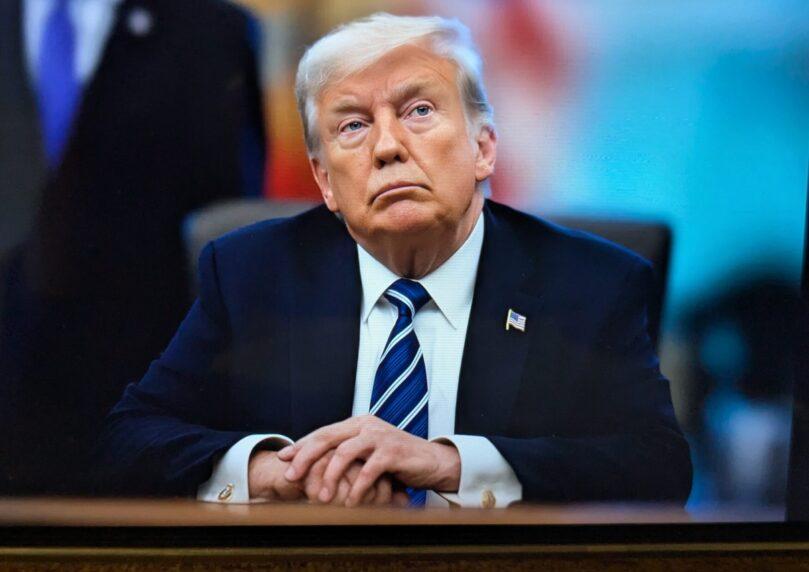

President Donald Trump said Thursday he is considering “very likely” withdrawing American forces from Italy and Spain. The remarks came just one day after he announced the administration is reviewing troop reductions in Germany. The declaration marks another escalation in Trump’s approach toward longtime allies and threatens traditional security stability in southern Europe.
During a press briefing, the president was asked whether he planned to examine pulling forces from the two countries. Trump answered affirmatively: “Yes, probably.” He added, wondering aloud: “Why wouldn’t I do that?” The president then detailed the reasons behind his potential decision, leveling sharp criticism at the countries’ conduct: “Italy hasn’t helped us at all, and Spain has been terrible, just terrible and awful.”
The current announcement is a direct continuation of Trump’s “America First” policy, which emphasizes the need for allies to share the security burden more equitably. On Wednesday, the administration announced a formal review of reducing military presence in Germany. Trump has repeatedly criticized Germany in the past for failing to meet NATO defense spending targets.
A day later, Trump expanded the threat to Italy and Spain as well. Italy hosts critical American bases, including Aviano Air Base and the Sixth Fleet headquarters in Naples, while Spain hosts the Rota Naval Station, a key logistical and strategic hub.
A possible withdrawal from Italy and Spain isn’t just symbolic. It would damage America’s rapid response capability in the Mediterranean basin, North Africa, and the Middle East. Trump’s policy places a big question mark over NATO’s future. If the threat is carried out, European allies will be forced to rebuild their defense systems without the immediate backing of American boots on the ground—something that could shift the balance of power against regional and global threats.
President Donald Trump has expressed deep frustration with NATO in recent weeks over what he defines as European allies’ unwillingness to actively join the war against Iran and help break the naval blockade in the Strait of Hormuz. In his conversations, Trump called the alliance a “paper tiger” because of its refusal to enter the conflict directly, and he has repeatedly raised the possibility of an American withdrawal from the organization.
In April, Trump met in Washington with new NATO Secretary General Mark Rutte for a meeting that senior alliance officials described as including “honest discussions” on transatlantic security and tensions with Iran. During the meeting, Rutte emphasized the importance of American leadership in the alliance and the increase in defense investments by other members.
Trump continued the aggressive line and demanded Europeans show greater willingness to take military risks in the Middle East. Frustration from the meeting and the alliance’s conduct led the administration to examine punitive measures against “problematic” countries, including reducing forces in Germany, Italy, and Spain, and even the possibility of suspending Spain from activities within NATO.