


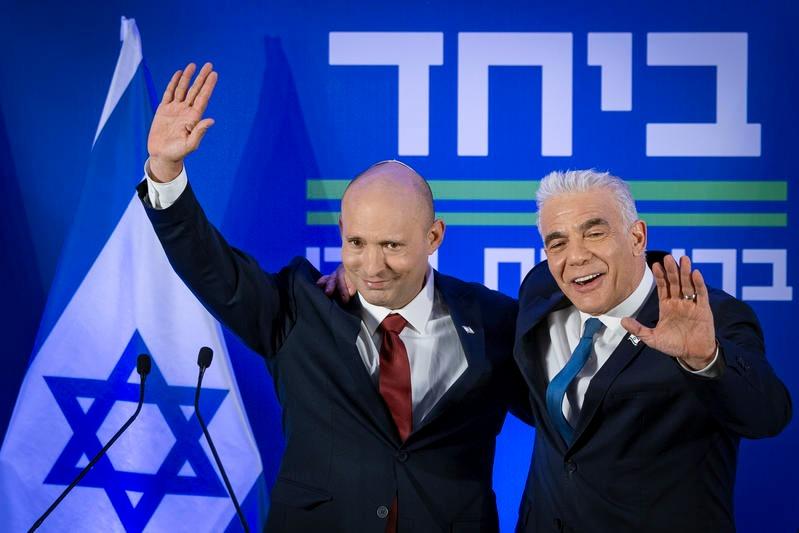

Mati Tuchfeld, head of C14’s political desk, argued on the midday news that the merger between former Prime Minister Naftali Bennett and opposition leader Yair Lapid doesn’t align with the opposition’s interests: “The good of the bloc was not what they had in mind.”
“I don’t think the consideration here was the good of the left bloc, or even that the whole would be greater than the sum of its parts,” Tuchfeld emphasized. While the left has a well-known phenomenon of voters rushing to the largest party at the last minute—as happened with Tzipi Livni and Buji Herzog in the Zionist Union or with Benny Gantz and Yair Lapid in Blue and White—this time the motive was different and far more basic: “The goal is first and foremost to save the two of them.”
According to Tuchfeld, the opposition leader’s position in recent polls was dire: “Yair Lapid, in a poll less than a week ago by Momo Filber, didn’t pass the electoral threshold and he needed some kind of lifeline to stay relevant.”
Lapid isn’t the only one who needed this merger. Tuchfeld also analyzed Naftali Bennett’s situation, describing his support base as particularly shaky—one that relies on swing voters, perhaps among the most unstable in the political system.
Bennett’s main fear, according to Tuchfeld, stemmed from the possibility that another political figure would take his place as the leading alternative. “It’s enough for the left camp to identify that the natural leading candidate is Eisenkot and not him, and his decline could have reached the point where maybe he wouldn’t even make it to the finish line, so the move first and foremost of the merger was designed above all to save both of them.”
Following the merger, Bennett can breathe easier. Tuchfeld noted that now he will “pass the electoral threshold with certainty” and his candidacy for prime minister has been secured. Lapid also gained his return to the political “map” after hovering above the threshold.
However, what’s good for the candidates individually isn’t necessarily good for their camp. “The bad news that may emerge is for the bloc itself, which they’re not thinking about,” Tuchfeld concluded, estimating that the move might actually serve the other side of the political map: “There could be a move here that will decide the election in the end, and I think Netanyahu is pretty happy with this story.”